
- You are here:
- Home »
- Blog »
- Aggression / Reactivity »
- Fear Aggression in Dogs: Understanding and Managing Defensive Behavior
Fear Aggression in Dogs: Understanding and Managing Defensive Behavior
Introduction
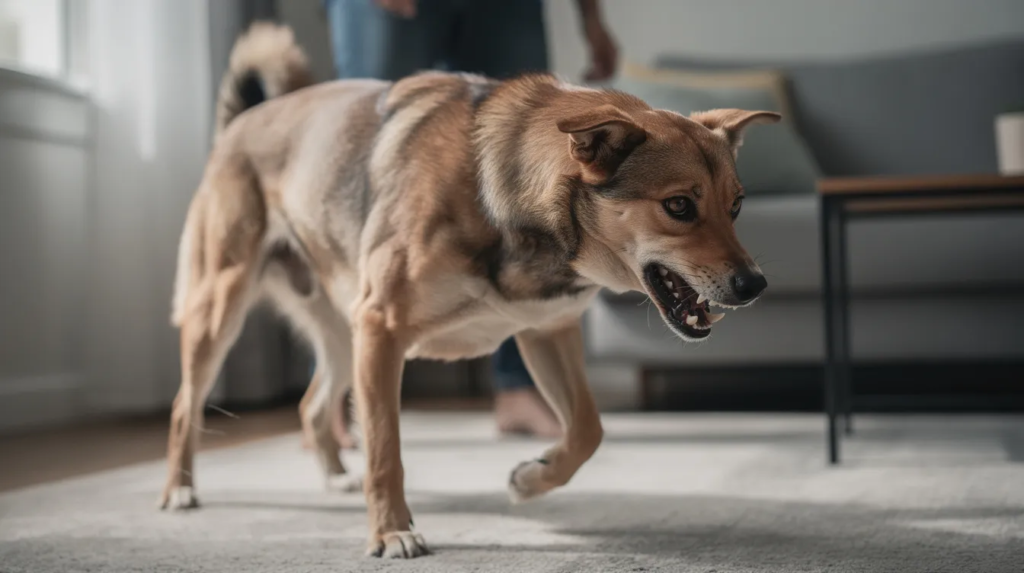
Fear aggression is a defensive response in dogs that occurs when they feel threatened or unsafe and believe they cannot escape the situation. Rather than a sign of dominance or defiance, this form of canine aggression is driven by anxiety and self-preservation-a dog’s attempt to create distance from a real or perceived threat. For dog owners in the Atlanta metro area dealing with a fearful, reactive, or aggressive dog, understanding this distinction is the first step toward meaningful behavior change.
This guide covers everything from identifying early warning signs and common triggers to professional training approaches and long-term prevention strategies. It is designed for pet parents navigating the daily challenges of living with fearful and aggressive dogs-whether the issue surfaces during neighborhood walks, at the veterinary clinic, or inside the home. While this content provides a thorough framework for understanding fear aggression, severe cases involving biting or escalating aggressive behavior require immediate veterinary consultation and professional intervention.
Direct answer: Fear aggression is a defensive behavior where dogs use threatening displays-barking, growling, baring teeth, or biting-to increase distance from perceived threats when they feel trapped or unable to retreat safely.
By reading this article, you will:
- Recognize early body language warning signs before aggression escalates
- Understand your dog’s triggers and the emotional response driving defensive behavior
- Learn the professional behavior modification techniques that produce lasting results
- Know when to seek help from a veterinary behaviorist or certified trainer
- Discover prevention strategies, including puppy socialization, that reduce future risk
Understanding Fear Aggression Fundamentals
Fear aggression is a defensive behavior motivated by anxiety rather than dominance or territorial aggression. When a dog perceives a situation as dangerous-whether the danger is real or imagined-its nervous system activates a fight-or-flight response. If flight is blocked, fight becomes the fallback. This underlying motivation separates fear based aggression from other forms of canine aggression, and it fundamentally changes how treatment should be approached. Mislabeling a fearful dog as dominant leads to confrontational methods that increase fear and worsen outcomes.
The distinction matters because treatment for fear aggression focuses on reducing threat perception and building a sense of safety-the opposite of the correction-based approaches sometimes applied to territorial aggression or resource guarding. A dog that reacts aggressively out of fear needs to learn that the world is safe, not that resistance is futile.
The Fear-Aggression Response Cycle
Dogs escalate through a predictable sequence before reaching a fear-based aggressive reaction. Understanding this cycle helps dog owners intervene early, before the situation becomes dangerous.
- Trigger perception: The dog perceives a threat-an unfamiliar person approaching, another dog entering its space, a sudden movement, or a loud noise.
- Early anxiety signals: The dog displays subtle stress indicators: lip licking, yawning, pacing, and avoidance. These are the dog’s first attempts to communicate discomfort and create distance.
- Defensive warnings: If early signals are ignored or the dog cannot escape, it escalates to growling, barking, and exhibiting threatening body posture. Fear aggression can manifest as barking, growling, or biting at this stage.
- Active defense: When all prior warning signals fail or escape remains impossible, the dog may snap, lunge, or bite. Fear aggression can escalate to active defense behaviors like snapping and biting.
This cycle is rooted in survival instincts. In evolutionary terms, animals that defended themselves when escape was impossible survived longer. In domestic dogs, this same wiring activates in situations that may seem harmless to us but feel genuinely threatening to them. A single frightening event can lead to fear aggression in dogs, and prior negative experiences create heightened sensitivity that makes the cycle trigger faster and with less provocation over time.
Defensive vs Offensive Fear Aggression
Not all fear aggression looks the same. Recognizing whether a dog displays defensive or offensive patterns shapes both immediate safety decisions and long-term treatment plans.
Defensive fear aggression is what most people picture: the dog backs away, tucks its tail, pins its ears, and barks or growls while retreating. The dog wants distance and communicates that through avoidance. This is the more recognizable form-the dog’s behavior clearly signals discomfort and the desire to escape.
Offensive fear aggression appears more confrontational. Dogs that exhibit offensive fear aggression move toward the trigger-lunging, barking explosively, or biting without obvious retreat behavior. This pattern often develops when a dog’s earlier defensive warning signals have been ignored or punished. The dog learns that subtle communication doesn’t work, so it skips to the most effective strategy: making the threat go away through force. According to PetMD’s behavioral analysis, offensive behaviors frequently emerge when dogs have been punished for growling, effectively removing the warning system that preceded biting.
Understanding whether your dog leans defensive or offensive helps professionals calibrate their approach and helps you manage immediate safety. Both types share the same emotional root: fear. The difference lies in learned strategy.

Identifying Fear Aggression Triggers and Warning Signs
Now that the mechanics of fear aggression are clear, the practical question becomes: what sets it off, and how do you see it coming? Early recognition is the single most important skill for any pet parent living with a fearful dog, because intervening before escalation is far more effective-and safer-than reacting after.
Common Environmental Triggers
Fear aggression can be directed toward unfamiliar people, other dogs, or certain environments. The most frequently reported triggers include:
- Strangers approaching: Unfamiliar people entering the dog’s environment, especially those making direct eye contact or sudden movements
- Other dogs: Encounters at dog parks, on walks, or even through fences with other animals the dog doesn’t know
- Loud noises: Thunderstorms, fireworks, construction-common stimuli in Atlanta’s urban and suburban neighborhoods
- Veterinary or grooming settings: Confinement, handling by unfamiliar people, and uncomfortable situations create a perfect storm for fear
- Environmental changes: A sudden change in the dog’s environment, such as moving to a new home or introducing a new household member
Past trauma or abuse can cause a dog to develop fear-based aggression, and traumatic experiences create lasting negative associations in dogs. A rescue dog that was handled roughly may respond fearfully to anyone reaching toward its head. Certain stimuli like sudden movements can trigger fear aggression even in dogs without an obvious past history of trauma. Genetic predisposition can also play a role in a dog’s nervousness and anxiety, meaning some dogs arrive predisposed to respond differently to stress than others.
Body Language Warning Signs
Understanding body language is important for preventing aggressive behavior in dogs. A dog’s body language communicates its emotional state well before aggressive displays begin. Here is what to watch for:
Early signals (intervention window):
- Lip licking when no food is present-lip licking can indicate a dog’s anxiety or fear
- Yawning outside of tiredness contexts
- Ears pinned back or rotated sideways-ears pinned back indicate fear in dogs
- Whale eye (showing the whites of the eyes)-whale eyes show a dog’s fear and discomfort
- A dog’s tail tucked between legs-a tucked tail is a common sign of fear aggression
- Pacing is a behavior associated with fear in dogs
- Avoiding eye contact or turning the head away
Escalation signals:
- Freezing in place (the dog goes rigid)
- Growling or low rumbling vocalizations-defensive barking and growling can indicate fear aggression
- Baring teeth with lips pulled back
- Raised hackles along the spine
Autonomic signs:
- Excessive panting without physical exertion-autonomic signs of fear aggression include excessive panting and dilated pupils
- Dilated pupils
- Trembling or shaking
Learning to read your dog’s body language at the earliest stage gives you the ability to remove the dog from the situation, remain calm, and prevent escalation.
Situational Risk Factors
Certain circumstances dramatically increase the likelihood of a fear-based aggressive reaction:
- Feeling trapped: When a dog is cornered in a room, restrained on a short leash, or confined in a crate without an exit option, defensive responses intensify. Dogs that feel trapped lose the “flight” option and default to “fight.”
- Pain or illness: Pain or medical conditions can trigger aggressive behavior in dogs. A dog with undiagnosed arthritis, dental disease, or an injury may react aggressively to touch that aggravates discomfort.
- Overwhelming stimuli: Crowded environments, busy sidewalks, or chaotic household gatherings can push an anxious dog past its threshold.
- Inadequate socialization: Dogs isolated during the critical socialization window of 3–12 weeks are 580 times more likely to develop fear aggression. Lack of early socialization may lead to fear and anxiety in adult dogs, making everyday encounters feel threatening.
Confinement and lack of escape routes are among the most potent intensifiers. This is why many dogs that seem manageable in open spaces become aggressive in hallways, veterinary exam rooms, or when a familiar person corners them unintentionally. Recognizing these risk factors allows you to restructure your dog’s environment proactively-which is exactly where professional training approaches begin.

Professional Training Approaches for Fear Aggression
Managing fear aggression effectively requires more than avoiding triggers-it requires systematically changing the dog’s emotional response to those triggers. This is where structured behavior modification becomes essential. At Off Leash K9 Training Atlanta, the approach to reactive and aggressive dog training follows evidence-based protocols designed specifically for fearful dogs, building confidence through controlled, positive experiences rather than suppression.
Behavior Modification Protocol
Comprehensive behavior modification is recommended when a dog’s fear aggression affects daily life, safety, or the household’s well-being. Management and reducing fear aggression requires a structured approach:
- Comprehensive assessment of triggers and threshold levels: A certified trainer evaluates the dog’s triggers, the intensity at which the dog begins to respond fearfully, and any contributing medical issues. Veterinary checkups can identify health issues that may contribute to aggression, so an early veterinary consultation is essential for sudden aggression changes.
- Controlled environment setup for desensitization training: The training environment is structured so the dog encounters triggers at sub-threshold levels-far enough away or muted enough that the dog notices but doesn’t react. Systematic desensitization helps dogs gradually adjust to their triggers through repeated exposure at manageable intensities.
- Counter-conditioning with positive associations: While the dog is exposed to a diluted version of the trigger, high-value rewards are introduced. Counter-conditioning can help alter a dog’s emotional response to triggers, shifting the association from “threat” to “good things happen.” Over time, the dog’s fear includes less intensity because the emotional state has genuinely shifted.
- Gradual exposure therapy under professional supervision: Trigger intensity increases incrementally as the dog demonstrates comfort at each level. This is not flooding-the dog is never overwhelmed. Distance from triggers helps manage a dog’s fear-based behavior while training progresses.
- Integration of obedience training to build confidence: Commands like sit, look, and leave it give the dog predictable structure. Dog obedience training provides the dog with clear communication channels that reduce uncertainty-one of the primary drivers of fear. Behavior modification should focus on changing emotional responses, and obedience provides the framework for that change.
Training Method Comparison
Choosing the right methodology is critical for fear-aggressive dogs. The wrong approach doesn’t just fail-it makes the problem worse.
| Criterion | Positive Reinforcement | Punishment-Based Methods |
| Effectiveness for fear aggression | Addresses root cause (fear); produces lasting emotional change | Suppresses symptoms temporarily; does not change underlying motivation |
| Safety | Low risk of escalation; maintains warning signals | High risk; punishing fear responses can increase anxiety and worsen aggression |
| Long-term results | Stable behavior improvement; reduced baseline anxiety | Frequent regression; dog may skip warnings and bite without signals |
| Impact on human-dog bond | Strengthens trust; dog views owner as source of safety | Damages trust; dog may develop fear of handler |
| Supported by evidence | Endorsed by AAHA, Merck Veterinary Manual, CCPDT | Contraindicated by major veterinary and behavioral organizations |
The evidence is unambiguous: positive reinforcement training builds confidence and reduces fear aggression, while punishing fear responses can increase anxiety and worsen aggression. Avoiding punishment prevents escalation of fear aggression in dogs. This is why Off Leash K9 Training Atlanta’s approach prioritizes reward-based methods-especially for many dogs whose aggressive responses are rooted in negative emotions rather than willfulness.
Research supports this approach at scale. A study through the Dog Aging Project involving over 43,000 dogs found that more than 84% show signs of fear or anxiety in everyday situations. Without intervention using appropriate methods, these behaviors often escalate into aggression. In shelter settings, research published in Applied Animal Behaviour Science demonstrated that fearful dogs receiving just 30 minutes of daily positive human interaction passed behavioral screening at dramatically higher rates-23 of 30 enriched dogs versus only 10 of 30 controls.
Common Challenges and Solutions
Even with professional guidance, Atlanta dog owners managing fear-aggressive dogs encounter specific recurring obstacles. Here are the most common and how to address them.
Dog Shows Aggression Toward Family Members
When a dog directs fearful behavior toward people within the household-a familiar person it should trust-the situation requires immediate attention. This often happens when family members inadvertently trigger the dog through sudden movements, looming body posture, or approaching the dog’s safe space during rest.
Solution: Implement immediate management using baby gates, separate rooms, and leash control indoors to prevent unsupervised interactions that could escalate. Avoid punishing the dog-this will only increase fear. Identify the specific triggers (reaching over the dog, direct eye contact, approaching while eating) and eliminate them while professional help is arranged. Certified trainers can recommend behavior modification exercises tailored to household-specific dynamics, and a board and train program may be appropriate for intensive cases where household safety is at risk.
Fear Aggression Worsens Despite Training Efforts
If aggressive responses are increasing in frequency or intensity, or if the dog has begun skipping warning signals and going straight to biting, current approaches aren’t working. This is a sign to stop DIY methods immediately.
Solution: Veterinary behaviorists can diagnose and treat fear aggression, including recommending medication such as SSRIs or TCAs when behavior modification alone is insufficient. Pain or medical conditions can trigger aggressive behavior in dogs, so a thorough veterinary evaluation should be the first step. Professional help is crucial for managing fear aggression effectively-a structured treatment plan from a qualified behaviorist ensures the dog isn’t being pushed past threshold or exposed to counterproductive techniques.
Dog Reactive to Other Dogs During Walks
Leash reactivity toward other dogs is one of the most common expressions of fear aggression in Atlanta’s busy neighborhoods. Many dogs that seem fine at home become explosive when encountering unfamiliar dogs on walks.
Solution: Begin with management: plan routes that avoid high-traffic areas and dog parks during peak hours, maintain distance from triggers, and use a front-clip harness for control. Practice threshold work-reward calm behavior when other dogs are visible at a distance where your dog can stay calm. Avoiding known triggers is crucial for preventing fear-based reactions while training progresses. For structured socialization guided by professionals, Off Leash K9 Training Atlanta offers programs that systematically rebuild a dog’s comfort around canine socialization challenges.
Conclusion and Next Steps
Fear aggression in dogs is not a character flaw or a dominance problem-it is an emotional response rooted in anxiety and experience. Managing it effectively requires understanding your dog’s triggers, reading early warning signals in your dog’s body language, and applying consistent, science-backed behavior modification. Quick fixes and punishment-based corrections don’t address the underlying motivation; they suppress symptoms while the fear grows underneath.
Here are your immediate next steps:
- Implement basic safety management today: Avoid punishing fearful behavior, ensure your dog has escape routes and a dog’s safe space in your home, and prevent known trigger situations until professional guidance is in place.
- Schedule a free phone consultation with Off Leash K9 Training Atlanta to discuss your dog’s specific situation and determine the right training approach.
- Request a veterinary evaluation to rule out pain or medical conditions contributing to your dog’s behavior.
For younger dog owners or those with young puppies, prevention is far more effective than treatment. Early puppy socialization programs during the critical 3–14 week window dramatically reduce the risk of fear-based aggression developing later in life. Inadequate socialization during puppyhood can lead to fear aggression-investing in proper exposure now prevents aggression in the future.
Additional Resources
- Reactive/Aggressive Dog Training: Off Leash K9 Training Atlanta’s specialized program for fearful and aggressive dogs, designed around systematic desensitization and counter-conditioning protocols.
- 2 Week Board & Train Program: An intensive option for severe cases where the dog needs immersive, structured behavior modification in a controlled environment with professional oversight.
- 1 Week Puppy Board & Train: Prevention-focused training for young puppies to build confidence and prevent aggression through early socialization and positive experiences.
- Free phone consultations are available for initial assessment-contact Off Leash K9 Training Atlanta to discuss your dog’s specific needs and determine the right path forward.