
- You are here:
- Home »
- Blog »
- Uncategorized »
- Place Command for Dogs: A Simple Skill for Better Home Manners
Place Command for Dogs: A Simple Skill for Better Home Manners
Key Takeaways
- The place command for dogs means teaching your dog to go to a defined spot, such as a dog bed, cot, or mat, and remain there until you give a release cue.
- This command can support calmer behavior, impulse control, and better home manners by giving your dog a clear action to perform around everyday distractions like guests, meals, and doorways.
- A clear place target plus consistent practice and clear release cues help dogs understand what to do and how long to stay.
- Common mistakes include practicing only during chaos, releasing too early, and not building duration gradually.
- Most dog owners can teach place with simple dog training tips at home, and professional dog training can help when dogs struggle with distractions or reactivity.
Introduction
The place command for dogs is exactly what it sounds like: you teach your dog to go to a defined spot, whether that is a bed, cot, or mat, and remain there calmly until released. It is a valuable household skill for managing everyday activities and giving your dog a clear behavior to follow.
In this guide, we will explain what place means, why it helps with home manners, cover real-life situations where it shines, share dog training tips for teaching it at home, highlight mistakes that can slow progress, and discuss when professional help may be worth exploring.
What Is the Place Command for Dogs?
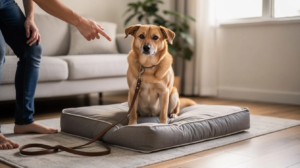
The place command directs dogs to a designated area, such as a dog bed, cot, or mat, and asks them to remain there until released. Depending on the expectations you teach, the dog may sit, lie down, or stand calmly while keeping all four paws on the surface. The goal is not to freeze your dog in a rigid position but to give them a clear location and behavior to follow.
This is where place differs from a traditional “stay.” With a stay, the dog holds a position but may not have a clear object or boundary to anchor them. A defined target, like a mat or cot, helps dogs understand their “place” because the edges create a visual boundary. The command can be generalized to various defined spaces and items around your house. When a dog understands the concept, you can bring a portable mat to a friend’s house or a new room, and the exercise works the same way. Place fits naturally into overall dog obedience, calm behavior, and impulse control training because it gives your dog something constructive to do in the middle of life’s distractions.
Why Place Command Helps With Home Manners
A reliable place cue can reduce many of the problem behaviors that make daily life harder. The place command can help manage household chaos and enhance training effectiveness because it replaces unwanted actions with a clear alternative.
Here is what it addresses:
- It helps prevent unwanted behaviors like jumping on guests, begging at the table, pacing, and nuisance barking by giving your dog a job to focus on.
- The place command promotes calm behavior in dogs. Going to bed and settling teaches your dog to relax even when interesting things are happening nearby.
- It improves impulse control by teaching dogs to stay put. Staying on a defined target while hearing clattering dishes, kids playing, or footsteps at the door helps the dog think before reacting.
- A familiar place target can give some nervous or easily distracted dogs a predictable location where calm behavior is rewarded. However, the place command should not be used to force a fearful or reactive dog to remain close to a trigger. Give the dog enough distance to feel safe and seek professional guidance when anxiety or reactivity affects safety or daily life.
Dogs do not always apply a learned cue automatically in every location. Practice place gradually in different rooms and around manageable distractions so your dog learns that the cue has the same meaning in a variety of everyday situations.

Everyday Situations Where Place Command Is Useful
Using the place command makes daily life easier for dog owners. Here are specific scenarios where it shines:
- Guests arriving: Once your dog understands the cue, sending them to a cot or mat can help manage door rushing and jumping while visitors enter. Begin with controlled practice rather than expecting the dog to succeed for the first time during a busy arrival.
- Mealtime: Keeping your dog in a place near the kitchen or dining area can reduce opportunities for begging, counter surfing, or stealing food. Continue supervising and managing access to food while the behavior is still being learned.
- Door manners: A mat by the front door teaches your dog to wait calmly while packages arrive, kids come inside, or you carry groceries.
- Cleaning and chores: Ask your dog to go to their place while you vacuum or carry laundry. It keeps both of you safer and the house calmer.
- Busy household activity: Evenings with kids, TV noise, or home workouts go smoother when your dog has a good place to settle in a quiet corner.
- Travel and visits: Bring a portable mat so your dog has a familiar location in hotel rooms, rental cabins, or a friend’s house. This bit of consistency helps your dog relax in new spaces.
Dog Training Tips for Teaching Place
You can begin teaching at home with a few simple steps. Training may include luring, marking, shaping, duration building, and gradual distraction work. Sitting down can be a helpful supporting skill, but a dog does not need to master them before learning to step onto a mat or bed.
Choosing a target: Pick a comfortable surface large enough for your dog to lie down, such as a raised cot, bed, blanket, towel, or rubber-backed mat. Clear edges may make the boundary easier for some dogs to understand, but a raised or thick target is not required.
Introducing the spot: Use high-value treats to encourage your dog to go to their place. Lure them onto the surface with a treat held just above it. The moment all four paws land on the mat, use a marker word like “yes” and reward immediately on the bed. Repeat step by step until the dog walks onto the spot with confidence.
Adding the word: Once your dog is reliably stepping onto the target, say “place” just before they get on. Over time, fade the lure, so the word alone sends the dog to go to the spot.
Duration and calm behavior: Begin with only a few seconds on place and add time gradually while your dog remains comfortable and successful. Some dogs progress quickly, while others need smaller increases. Mix easier repetitions with more challenging ones rather than making every session longer.
Release cue: Use a consistent word such as “okay,” “free,” or “break” to tell your dog when the exercise has ended. Reward calm waiting and release the dog before the task becomes too difficult. If the dog leaves early, calmly reset the exercise and make the next repetition shorter or easier.
Distance and distractions: Gradually increase distance by sending the dog from a few steps away, then from across the room. Practice in different rooms to help generalize behavior. Start with low distractions like walking past or opening the fridge, then work up.
Session structure: Keep sessions brief and end while your dog is still engaged. Several short repetitions throughout the day are often easier than one long session. Use praise, treats, or another reward your dog enjoys to build a positive association with the place target.
Mistakes That Can Slow Progress
Even with the best intentions, a few common missteps can slow your dog’s progress. Do not forget these pitfalls:
- Only using the ” place during chaos: If you only call “place” when guests arrive or the dog is wild, the dog associates the cue with stress. Practice when the house is quiet half the time so the dog sees the place as a normal, positive part of life.
- Ending sessions after restlessness begins: Aim to release your dog while they are still comfortable rather than waiting until they become frustrated. If they begin to fidget, reduce the duration or distraction during the next repetition.
- Leaving before the release cue: If your dog steps off early, calmly invite them back and reward success. Avoid scolding or repeatedly forcing them onto the target. Frequent early departures usually mean the exercise became too difficult too quickly
- Jumping ahead with distractions: Loud noises, running children, visitors, or nearby food may be too difficult for your dog to remain comfortably in place in a quiet setting. Add one mild distraction at a time and reduce the difficulty if your dog repeatedly leaves or shows signs of stress.
- Inconsistent rules: Changing the cue word, sometimes letting the dog wander off, or cueing with your body in conflicting ways, confuses the dog. Keep your language and expectations simple and consistent. When the dog understands that the rules are the same every time, you will see faster progress.
When Professional Training May Help
Some dogs and households present challenges that go beyond what a few practice sessions at home can manage. If your dog is highly reactive around other dogs, anxious near strangers, or unable to relax when children or guests are present, structured private dog training lessons can make a real difference.
A professional trainer can help with timing, release cues, and introducing realistic distractions at an appropriate pace. For owners who need additional support, a board-and-train program can provide concentrated practice with a trainer. Continued owner instruction and consistent follow-through at home are still important for maintaining the behavior in everyday situations.
If you feel stuck, overwhelmed, or worried about safety, reaching out for a professional assessment tailored to your dog’s behavior and household is a smart next step.

Final Thoughts on the Place Command for Dogs
The place command for dogs is a simple, practical skill that can support calm behavior, impulse control, and better home manners. It does not require complicated equipment or lengthy training sessions. With patient, consistent practice tailored to the individual dog, many owners can build a useful place response for everyday life.
Steady practice, a defined place like a dog bed or mat, and clear expectations give your dog the structure they need to relax and stay out of trouble. If you want more reliable obedience, smoother home manners, and a dog that can handle real-world distractions with confidence, consider scheduling a free consultation to get personalized guidance for your household.
FAQ
Here are answers to common questions about teaching and using the place command.
How old should my dog be before I start teaching the place command?
A puppy as young as 10 to 12 weeks can begin simple place training using very short sessions and plenty of rewards. Keep the exercise lighthearted at this age with no pressure to hold position for long. Adult dogs of any age can also learn, though dogs with a long history of excited behavior may need more repetitions and patience before you see consistent success.
How long should my dog stay on their place during everyday use?
Begin with a duration your dog can complete comfortably, which may be only a few seconds. Gradually build toward the amount of time that is useful for your household while considering the dog’s age, health, energy level, and training history. Include regular movement, bathroom, and exercise breaks rather than expecting the dog to remain on place for long uninterrupted periods.
Can I use more than one place spot in my home?
Yes. It is fine to have multiple defined spots, such as a cot in the living room and a mat in the kitchen. Teach the place on one object first, then introduce a second and third spot once the dog understands the basic idea. This helps the dog learn that “place” refers to any clearly defined surface you point to, not just one stand in one room.
What should I do if my dog refuses to go to their place?
Check that the surface is comfortable, stable, and not too slippery. Use a treat or toy to encourage voluntary interaction, and reward small steps such as looking at, approaching, or placing one paw on the target. Avoid pulling or forcing a hesitant dog onto the surface. If avoidance continues, try a different target and consider whether discomfort, fear, or a previous negative experience may be contributing.
Is it okay if my dog chews a toy or bone while on place?
A suitable toy or food-filled enrichment item may help some dogs relax on place, but choose an item appropriate for your dog’s size, chewing style, and health. Supervise new items and remove anything that breaks apart or could be swallowed. If multiple dogs are present, provide chews in separate areas and avoid high-value items around dogs with resource-guarding concerns.
Related Posts
What Is an E-Collar for Dogs: A Complete Guide to Electronic Training Collars
Signs of Stress in Dogs: Expert Guide to Recognizing and Managing Canine Anxiety
How to Potty Train a Puppy With a Clear Routine
How to Improve Dog Focus Around Distractions
How to Stop a Dog From Licking People: Training Better Greeting Manners
Marker Training for Dogs: How Clear Timing Improves Obedience