
- You are here:
- Home »
- Blog »
- Uncategorized »
- Why Dogs Panic in the Crate When Left Alone and What Owners Can Do
Why Dogs Panic in the Crate When Left Alone and What Owners Can Do
Key Takeaways
- A dog panicking in the crate is usually reacting to fear, stress, or separation anxiety, not being “stubborn” or “bad.”
- Dog separation anxiety crate issues are often made worse when the crate is only used at departure time or as punishment.
- Calm crate conditioning, positive associations, predictable routines, and gradual absences kept below the dog’s distress threshold may help. Obedience skills can support daily structure, but they do not, by themselves, treat separation anxiety.
- Severe panic, self-injury, or escape attempts are safety concerns. Stop leaving the dog crated alone, record video when it can be done safely, and contact a veterinarian or veterinary behaviorist for guidance.
Introduction
Dog separation anxiety crate problems can be distressing for both dogs and owners. If your dog barks nonstop, scratches at the door, pants heavily, or soaks the bedding with drool after you leave, the behavior may reflect separation-related distress, confinement anxiety, or another issue that needs closer assessment.
Crates can be useful management tools for dogs that have been conditioned to feel comfortable inside them. However, a dog that associates confinement with fear or an owner’s departure may become more distressed in a crate rather than calmer.
Some dogs can build calmer crate behavior through gradual, positive training, while others may need an exercise pen, gated room, sitter, or professional behavior plan instead. The first step is identifying whether the trigger is the crate, the owner’s absence, or both.
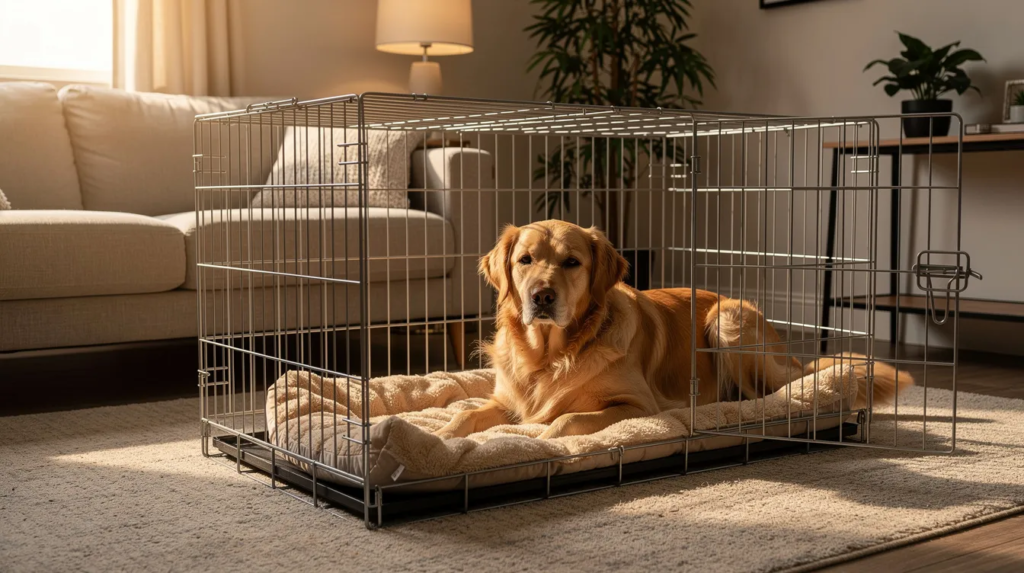
Why Dogs Panic in the Crate When Left Alone
Crate panic is driven by emotion, not defiance. Understanding the root cause is the first step toward helping your dog feel calmer.
Here are the primary reasons dogs panic:
- The crate predicts isolation. Linking departure cues to absence can increase a dog’s anxiety about confinement. If you only crate the dog before leaving for work, the crate becomes a signal that hours of alone time are coming.
- Separation anxiety. Dogs with separation anxiety experience significant distress when separated from their owner. Signs may begin as the owner prepares to leave or within the first 15 to 30 minutes after departure. Some dogs may injure themselves during frantic escape attempts.
- Confinement anxiety. Some dogs become distressed when physically restricted, even if they tolerate being alone in a larger, dog-proofed space. Comparing video from crate, exercise pen, and gated room setups can help owners and professionals identify this pattern.
- Rushed crate training. Dogs pushed into a crate and shut in for long periods too soon often form negative associations with that kennel or space.
- Past experiences and major changes. A change of home, guardian, schedule, or household membership can be associated with separation-related distress. A dog’s previous experiences may also affect how they respond to confinement, but rescue status alone does not prove that the crate is the cause.
- Physical discomfort. Being crated too long without bathroom breaks, being too hot or too cold, or using a crate that is too small all increase agitation.
How Dog Separation Anxiety Affects Crate Training
Separation anxiety is more than mild worry when you leave. It is an intense fear of being alone that causes pacing, panting, drooling, vocalizing, and escape attempts right after the owner steps out. Dogs may experience anxiety if they associate crates with being alone.
When crate problems are connected to dog separation anxiety, the crate may become a signal that the owner is about to leave. This can make confinement feel threatening even when the crate itself presents no physical danger. Positive conditioning may help some dogs, but others may remain more comfortable in an exercise pen, gated room, or carefully dog-proofed area.
If your dog remains relaxed in the crate while you are home but becomes distressed after you leave, your absence is likely part of the trigger. However, this pattern alone cannot confirm a diagnosis, and some dogs experience both separation-related distress and confinement anxiety.
Record the first 20 to 30 minutes after leaving and compare the dog’s behavior in different safe setups when possible. Share the footage with a veterinarian, veterinary behaviorist, or qualified behavior professional who can help identify whether the main trigger is isolation, confinement, or a combination of both.
Common Signs Your Dog Is Stressed in the Crate
Crate anxiety can cause destructive behavior in dogs and a range of stress signals that owners should learn to recognize. Here is what to look for:
- Vocal signs: Continuous barking, high-pitched whining, howling that starts soon after departure, or crying that pauses and then erupts again.
- Physical stress signs: Heavy panting when the room is cool, drooling puddles, shaking, or a tight tucked tail near or inside the crate.
- Movement patterns: Pacing in circles, constant shifting, repeated standing and lying down, or throwing their body against the crate door or sides.
- Destructive behavior: Scratching or digging at the crate floor, chewing the bars or plastic, bending wires. In severe cases, this leads to broken teeth, bloody paws, or shredded bedding in a single session.
- Elimination signs: Urinating or defecating in the crate when the dog is normally house-trained and has had a bathroom break.
Record at least the first 30 minutes after leaving when it is safe to do so. Note when each behavior begins, how intense it becomes, and whether the signs change as the absence continues. Share the footage with a veterinarian or qualified behavior professional rather than using one short recording to make a diagnosis.

How Dog Separation Anxiety Affects Crate Training
Several specific patterns can help owners pinpoint what is driving their dog’s anxiety:
- Some dogs become distressed when they see departure cues such as keys, shoes, or a work bag. Following an owner around the house may also occur, but shadowing by itself does not confirm separation anxiety.
- A dog may be calm in a crate overnight when the owner is in the same room, but panic during daytime crate sessions when the owner leaves the house.
- Other dogs relax when crated next to a calm person watching TV in the room, but bark or dig at the crate the moment that person walks away.
- Some dogs show pre-departure distress when the crate appears immediately before the owner leaves. Practicing neutral crate sessions while the owner remains nearby may help weaken this association. Close the door only for as long as the dog remains comfortable, which may initially be a few seconds rather than several minutes.
How to Build Calmer Crate Manners
Building calm crate behavior is a gradual process, not an overnight fix. The goal is to teach your dog that the crate means good things, at a pace they can handle. Monitoring anxiety levels during training sessions is crucial for success.
- Start with the door open. Let the dog explore the crate at their own pace. Toss a few treats or a small food trail inside. Do not close the door yet.
- Feed meals inside. Place regular meals in the crate with the door open at first. Then gently close the door for a few minutes while the dog eats and reopen before they finish.
- Keep the early stages below the dog’s stress threshold. Some dogs can begin with a minute or more, while others need sessions lasting only a few seconds. Increase the duration only while the dog remains relaxed, and shorten the next session if you see panting, drooling, pacing, vocalizing, freezing, or escape behavior. Avoid moving toward fixed 15-, 30-, or 60-minute goals before the dog is ready.
- Use crate games. Give an appropriately sized food toy or safe chew after the dog enters voluntarily, and remove it when the session ends. This can help build a positive association in mild cases, although dogs experiencing significant distress may refuse food or be unable to engage with a toy.
- Teach a release cue. Use a consistent word like “OK” or “Free” so the dog learns the door opening does not mean they should rush out. This builds impulse control from the start.
- Mix up the timing. Practice brief crate sessions while you fold laundry, read, or work nearby so the crate is not used only before departures. Let the dog’s behavior determine whether the session lasts a few seconds or several minutes.
- Pair voluntary crate entry with high-value rewards and calm experiences. Increase duration gradually only while the dog remains comfortable. If distress begins, shorten the next session rather than waiting for the dog to push through the anxiety.
Make sure the crate allows your dog to stand, sit, turn around, and lie down comfortably. Use bedding only if your dog does not shred or swallow fabric, and test toys or food puzzles under supervision before leaving them in the crate. A worn shirt may comfort some dogs, but it should not be used if the dog is likely to chew or ingest it.
Obedience Skills That Support Alone Time
Basic obedience and impulse control are surprisingly helpful for building calmer crate manners. Here are skills to practice daily:
- Place command. Teach your dog to go to a mat or bed and relax until released. This helps them learn to settle in a defined spot, which transfers directly to crate time.
- Down and stay. Build duration starts with a few seconds and can last up to several minutes. Reward calm behavior. This teaches the dog that relaxing quietly is a skill, not just something that “happens.”
- Calm recall. Practice calling the dog from another room and asking for a dog sit or down before rewarding. This prevents racing in and out of spaces.
- Release cues. Use a consistent word to end commands like place, down, and crate time so the dog waits for permission rather than exploding out the moment the door moves.
- Impulse control exercises. Practice waiting at doors, having the dog sit before food, and pausing before they jump into the car. These exercises build the same patience needed for good crate manners.
Obedience skills can make daily routines clearer and help a dog practice settling while the owner is present. However, separation anxiety is an emotional response, not simply a lack of obedience. The core treatment is gradual alone-time work that stays below the dog’s panic threshold, with veterinary or behavior support when needed.
How to Build Calmer Crate Manners (Daily Routine Example)
Here is a sample routine for a dog that can already remain relaxed during brief crate sessions. Dogs showing panic, escape attempts, or severe distress need an individualized plan instead.
- Morning: A 15 to 30 minute walk or play session on leash, 5 to 10 minutes of obedience (place, down, recall), then breakfast given in the crate with the door shut for a short, calm interval.
- Midday (if possible): A brief potty break, 5 minutes of place or down stay, and a short crate session while you work in another room. If a midday visit is not possible, consider a dog sitter or dog walker to provide a break.
- Afternoon or early evening: Offer another walk and a short training session, followed by a brief crate exercise while you remain nearby. End the session before the dog shows signs of distress rather than aiming for a preset number of minutes.
The time spent on small, daily repetitions of crate and obedience work is more effective than one long, stressful crate session once in a while. Consistency builds habit.

Exercise, Structure, and Predictable Routines
Mental and physical needs must be met before expecting a dog to rest calmly in a crate.
- Regular exercise helps many dogs feel more relaxed and less restless, reducing pacing and digging when first crated. This is true for a puppy, an older dog, and every age in between.
- Mental stimulation matters as much as physical activity. Short training sessions, scent games, and food puzzles help the dog feel focused and satisfied.
- Predictable patterns reduce uncertainty. Similar wake times, walk times, feeding times, and crate times help the dog learn what to expect each day.
- Pre-crate routine: A brief walk, a bathroom break, 3 to 5 minutes of obedience, then quiet crate time. This sequence prepares the dog to settle.
- Avoid overstimulation before crating. Wild fetch or intense play right before crating can make it harder for excitable dogs to shift into rest mode. End with calmer activities.
- White noise or familiar household sounds may help mask environmental noises that trigger barking or alertness. Food toys can provide a positive activity for dogs that remain comfortable enough to eat. These tools may support a broader behavior plan, but they do not treat separation anxiety by themselves.
Mistakes That Can Make Crate Panic Worse
Many owners make these mistakes without realizing the impact. Here are the main pitfalls to avoid:
- Using the crate as punishment. Scolding the dog and sending them to the crate turns it into a place of conflict. The crate is supposed to feel safe, not threatening.
- Only crating before long departures. If the crate is only used when you leave for hours, the dog will strongly link it to being abandoned. Mix in neutral crate time throughout the day.
- Waiting through full panic can make crate fear worse and may lead to injury. Plan sessions short enough that the dog can remain calm, then release quietly before distress escalates. If the dog is already frantic, prioritize safety, end the session as calmly as possible, and make the next repetition much easier.
- Moving too fast. Jumping from a few calm minutes to several hours alone can overwhelm the dog and undo progress. Ignore the temptation to rush.
- Ignoring physical needs. Crating for long periods without potty breaks or water creates stress unrelated to training. If the crate causes panic, consider alternative solutions like a playpen or x pen while you work on building comfort.
- Over-reassuring at the door. Long, worried goodbyes increase arousal. Low-key exits and calm returns when you arrive home keep the routine predictable, not emotional.
Choose a crate based on size, ventilation, visibility, and the dog’s comfort, but do not use a stronger crate as the main solution for panic. Dogs that bend bars, break teeth, bloody their paws, or repeatedly try to escape should not be left to fight their way out of a heavy-duty enclosure. Pause crating and consider a gated room, exercise pen, sitter, or another safer arrangement while seeking professional guidance.
When Professional Training May Help
Not every case of crate panic can be solved with at-home adjustments alone. Here is when to seek professional guidance:
- Self-injury risk. If the dog injures themselves trying to escape, such as breaking teeth, scraping paws bloody, or bending metal bars, stop crating and get help immediately.
- Persistent extreme separation anxiety. If the dog remains in a high state of panic for most of the time you are gone, despite weeks of gradual crate work, a professional assessment is the right next step.
- Bring evidence. Record video clips of the first 20 to 30 minutes after departure so trainers or behavior specialists can see exact behaviors, intensity, and the dog’s behavior over time.
- Structured behavior modification. A qualified professional can design a gradual desensitization and counterconditioning plan and coordinate with a veterinarian when medication may help. Fluoxetine is FDA-approved for canine separation anxiety when used with a behavior modification plan. Trazodone is used off-label for anxiety in some dogs, but the appropriate medication, timing, and monitoring must be determined by a veterinarian. Do not start, stop, or adjust behavioral medication without veterinary guidance.
- Realistic timelines. There is no reliable universal timeline for separation anxiety. Progress depends on the dog’s trigger, severity, health, learning history, daily management, and ability to practice without repeated panic. Some dogs improve steadily, while others need a longer, carefully adjusted plan. Professional guidance can help keep the process safe, humane, and appropriate for the individual dog.
Final Thoughts
Crate panic is a stress response, not spite. When you understand dog separation anxiety crate challenges through that lens, the path forward becomes clearer. Slow down, teach calm routines, and pair the crate with predictably good experiences. Progress will not always be linear, but consistency matters more than speed.
Obedience skills, exercise, and structure can support a predictable routine, while gradual alone-time training addresses the emotional response to separation. Some dogs may eventually rest comfortably in a crate, while others remain safer and calmer in an exercise pen, gated room, or dog-proofed area. Success should be measured by the dog’s comfort and safety, not by crate use alone.
If your dog’s anxiety feels unsafe or overwhelming, contact your veterinarian first to rule out medical contributors and discuss the appropriate next steps. A veterinary behaviorist or qualified trainer with documented experience in separation-related distress can help create a safe plan for crate use, alternative confinement, and gradual alone-time training.
FAQ
Below are answers to common questions that cover concerns not fully addressed above.
How long can I safely leave my dog in a crate during the day?
There is no single safe crate limit for every dog. Age, health, bladder control, exercise, temperature, and the dog’s comfort with confinement all matter. Puppies need frequent bathroom and activity breaks, and adult dogs should not be routinely crated for an entire workday without opportunities to relieve themselves, move, drink, and interact. For longer absences, arrange a walker, sitter, daycare, or a larger dog-proofed area.
Should I crate my dog at night if they have separation anxiety?
Nighttime crating depends on the individual dog’s comfort with confinement. Placing the crate near the owner may help some dogs settle, but a dog that pants, vocalizes, attempts to escape, or cannot rest should not be forced to remain crated overnight. Use a safer sleeping arrangement while working with a veterinarian or qualified behavior professional.
Are puzzle toys and chews safe to leave in the crate?
Choose sturdy, crate-safe toys sized appropriately for your dog. Avoid items that can be easily shredded or swallowed in large pieces. Test any new chew or puzzle toy while supervising to confirm your dog uses it safely. For heavy chewers or dogs with a history of ingesting objects, consulting a vet or trainer about safe enrichment options is a good precaution.
Can some dogs never be crate-trained because of confinement anxiety?
Some dogs experience confinement anxiety severe enough that traditional crating is not an appropriate long-term option. These dogs may do better in gated rooms, exercise pens, or carefully dog-proofed areas while owners work on alone-time training. Professional guidance is especially helpful because the dog’s safety and mental well-being must come before the goal of crate use.
Is it better to leave my dog loose in the house instead of using a crate?
Some dogs are calmer in a dog-proofed area, while others are comfortable in a positively conditioned crate. Base the decision on safety and video recordings of the dog’s behavior in each setup. Do not continue crate trials if the dog shows panic or risks injury; use the safest arrangement while developing an appropriate alone-time plan.
Related Posts
Multi-Dog Household Training Tips: Complete Guide to Managing Multiple Dogs
When to Start Puppy Obedience Training: Complete Guide for Atlanta Dog Owners
What Is an E-Collar for Dogs: A Complete Guide to Electronic Training Collars
Signs of Stress in Dogs: Expert Guide to Recognizing and Managing Canine Anxiety
How to Stop Puppy Biting: Professional Training Guide for Atlanta Dog Owners
How to Potty Train a Puppy With a Clear Routine