
- You are here:
- Home »
- Blog »
- Puppy Training »
- How to Stop Puppy Biting: Professional Training Guide for Atlanta Dog Owners

How to Stop Puppy Biting: Professional Training Guide for Atlanta Dog Owners
Introduction
Puppy biting can usually be improved through consistent training techniques, including bite inhibition, redirection, and brief withdrawal of attention. The key is understanding why your puppy bites and applying the right response for the trigger consistently. Progress varies from puppy to puppy, particularly while normal teething and developmental mouthing are still occurring.
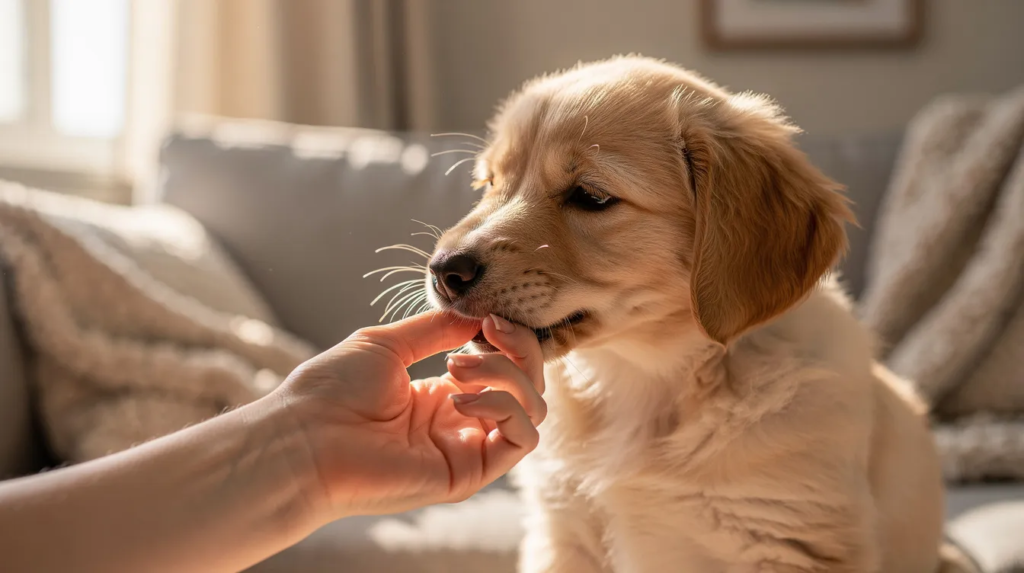
Puppy biting, nipping, and mouthing are extremely common concerns for new dog owners because using the mouth is a normal part of puppy development. Puppies naturally chew, investigate objects, and interact through their mouths. If you’re reading this with scratched-up hands and a shredded sleeve, you’re certainly not alone.
This guide covers practical training methods for normal puppy biting, how to distinguish playful mouthing from more concerning behavior, prevention strategies tailored to your puppy’s age and triggers, and when it’s time to seek professional help. It is designed for dog owners with young puppies experiencing play biting, puppy nipping, puppy mouthing, or intense biting during everyday interactions.
By the end of this article, you will:
- Understand what puppy bite inhibition is and how to help your puppy control jaw pressure
- Learn redirection techniques using appropriate chew toys and tug toys
- Know how to implement brief time-out methods appropriately
- Recognize warning signs that separate normal mouthing from more concerning biting behavior
- Have a practical training routine you can start today

Understanding Puppy Biting Behavior
Puppy biting is a normal developmental behavior that serves multiple purposes, from exploring the world and relieving teething discomfort to practicing social interaction. Understanding the “why” behind your puppy’s behavior can help you choose a response that fits the situation.
Why Puppies Bite
Puppies explore their environment by biting and mouthing objects and people. Using the mouth is a normal part of how puppies investigate and interact with their surroundings. Because human skin is much more sensitive than fur, even playful mouthing can feel painful when a puppy intends no harm.
Teething is another major driver of puppy chewing and biting behavior. According to the Merck Veterinary Manual, deciduous teeth generally begin erupting around 3–5 weeks of age, and most puppies develop about 28 baby teeth. Permanent teeth usually begin appearing around 4–5 months, and most dogs have their full set of adult teeth by about seven months.
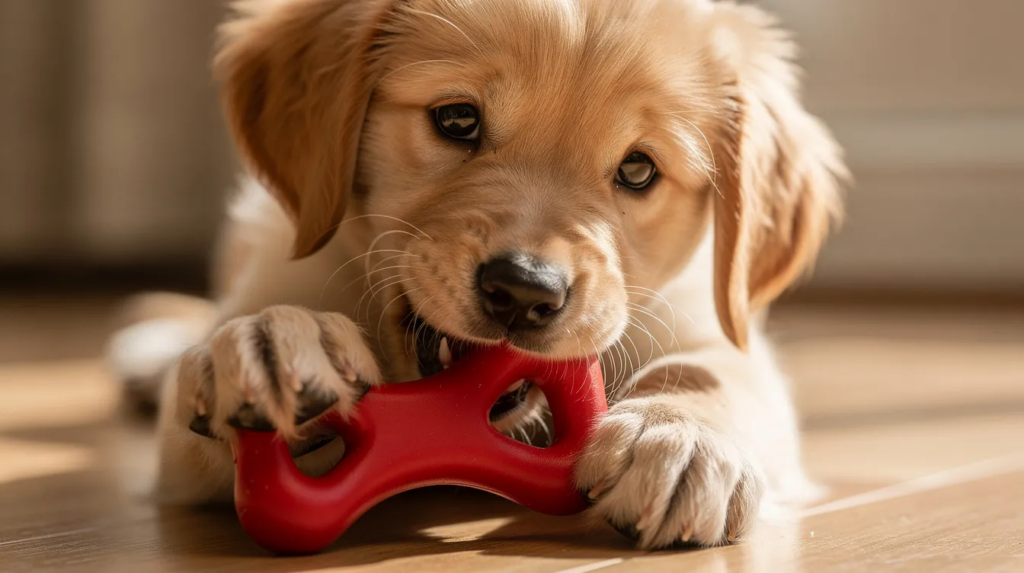
During this period, chewing can help puppies cope with gum discomfort. Appropriate chew toys, chilled puppy-safe toys, or food-stuffed rubber toys can give your puppy a better outlet than your hands, clothing, or furniture.
Puppies also bite during play, much like they do with their littermates. Puppies mouth, nip, chase, and wrestle together, and interactions can pause when one puppy bites too hard. Through these experiences, puppies begin learning to control the pressure of their mouths.
Puppies may try to initiate play with people in similar ways. Increased excitement, insufficient rest, or highly stimulating play can also make mouthing more frequent or difficult to redirect.
Each of these reasons, including exploration, teething, play, and overstimulation, can call for a slightly different response. A puppy chewing because of sore gums may benefit from an appropriate chew toy, while a puppy grabbing your hand to continue an exciting game needs to learn that teeth on skin cause the interaction to pause.
Normal vs. Aggressive Biting
Normal play biting often occurs with a relaxed body, loose and wiggly posture, playful movement, and mouthing that can be redirected toward an appropriate toy. Playful mouthing is a normal developmental behavior, although how quickly it decreases varies between puppies. Consistent training and appropriate chew outlets help puppies learn better ways to interact with people.
Warning signs that biting may be more concerning include a stiff or frozen posture, growling or snarling, exposed teeth, unusually painful bites, or biting associated with fear, frustration, guarding, or handling. Pain can also contribute to sudden changes in biting behavior.
The ASPCA notes that most puppy mouthing is normal but that fear- or frustration-related biting deserves closer attention. If biting regularly occurs with stiff body language, fear, guarding, or intense frustration, consult your veterinarian or an appropriate behavior professional rather than relying on basic redirection alone.
Atlanta owners who need structured help with normal puppy behaviors can also explore puppy training in Atlanta, with options that address mouthing and puppy biting, bite inhibition, basic-obedience foundations, house-training routines, and early leash skills.
Understanding which type of biting your puppy exhibits helps determine how intensive your training needs to be and whether professional support is warranted.
Essential Training Techniques
Now that you understand why your puppy bites and can identify the type of biting behavior you’re dealing with, it’s time to apply that understanding to practical training methods. Bite inhibition, redirection, and brief withdrawal of attention can all play a role in teaching better mouth habits.
Bite Inhibition Training
Bite inhibition is the process of helping a puppy learn to control the force of its mouth. Puppies begin developing this skill through interactions with their mother and littermates, where overly hard bites can interrupt play.
Teaching appropriate mouth pressure around people helps puppies learn that human skin is sensitive while they gradually transition away from mouthing people altogether.
Here’s a practical approach for teaching bite inhibition at home:
During gentle play, focus first on discouraging the hardest bites. If your puppy bites especially hard, you can briefly stop the interaction. A short high-pitched “ouch” or yelp may help some puppies recognize that the bite was too hard.
If vocal feedback makes your puppy pause, calmly resume interaction once the puppy settles. If your puppy becomes even more excited when you yelp, skip the vocal response and use calm withdrawal instead.
The ASPCA’s puppy mouthing guidance recommends brief interruptions when hard biting occurs, followed by a calm return to play.
With consistency, puppies can gradually learn to reduce the pressure and frequency of their mouthing, although the timeline varies. Physical punishment is not recommended because hitting or frightening a puppy can increase fear and may intensify biting behavior.
Redirection Methods
Redirection means substituting an appropriate chew or toy when your puppy attempts to bite your hands, clothing, or skin. Timing matters. Keeping appropriate toys nearby makes it easier to redirect your puppy as soon as mouthing starts.
Effective options may include:
- Rope toys and tug toys for channeling playful mouthing into an appropriate game
- Durable rubber chew toys for teething and independent chewing
- Chilled or frozen puppy-safe toys that may provide soothing pressure during teething
- Food-stuffed toys that combine chewing with mental enrichment
- A variety of safe textures to give your puppy appropriate alternatives to hands, sleeves, and furniture
When your puppy starts mouthing your hand, calmly offer the toy instead. Praise your puppy when they engage with the toy rather than your skin or clothing.
Consistent redirection helps your puppy learn which objects are appropriate to bite and chew. If biting people sometimes leads to exciting rough play and other times ends the interaction, learning may be less clear.
Tug can also be useful when played with simple rules. Keep the game focused on the toy, pause if teeth contact skin, and practice skills such as “drop it” to help your puppy disengage from the toy when asked.
Time-Out Techniques
Brief time-outs use a learning principle called negative punishment, which means temporarily removing something the puppy wants, such as attention or continued play, after an unwanted behavior.
If your puppy continues biting during interaction, calmly disengage. Depending on the situation, this may mean becoming still, turning away, or briefly moving away from the puppy.
The ASPCA describes short interruptions of about 10–20 seconds during bite-inhibition work and 30–60 seconds when teaching that teeth should not contact human skin. The goal is to make the consequence immediate enough that the puppy can connect the pause in interaction with the biting.
Keep your puppy’s crate associated with rest and positive experiences rather than routinely using it as punishment. Make sure family members respond consistently, and calmly resume interaction after the brief pause.
Attention withdrawal should be one tool among several. Redirection, appropriate chew outlets, rest, structured play, and reinforcement of desirable behavior remain important parts of the overall plan.
With these techniques understood, the next step is combining them into a practical daily routine.
Step-by-Step Training Protocol
Building on the individual techniques above, here’s how to combine bite inhibition, redirection, and brief withdrawal of attention into a practical daily training plan. Some puppies improve quickly, while others need continued practice throughout their teething and developmental stages.
Daily Training Procedure
Use short, focused training and play sessions throughout the day rather than relying on long periods of continuous activity. Puppies need significant rest, and the Atlanta Humane Society notes that puppies can need roughly 16–20 hours of sleep each day. An overtired or overstimulated puppy may become more difficult to redirect.
Here’s a step-by-step procedure:
- Set up your environment. Keep several safe chew toys, a tug toy, and training treats within reach. Puppy-proofing your home also helps reduce access to unsafe or tempting objects.
- Begin with controlled, gentle play. Use toys rather than encouraging wrestling or rough play with your hands.
- If your puppy starts mouthing your hands or clothes, redirect to an appropriate chew or tug toy. Praise your puppy for taking the toy.
- If mouthing becomes hard biting, briefly pause the interaction. You may use a short “ouch” if that helps your puppy disengage, but avoid it if vocal feedback makes the puppy more excited.
- If the puppy continues biting, calmly withdraw attention for a brief period.
- Once the puppy settles, resume interaction calmly and reward appropriate play.
- Practice useful cues such as “drop it” and “leave it” during appropriate training opportunities to improve communication and help manage objects safely.
- Finish when your puppy is still successful. Transition from active play into a chew, enrichment activity, or rest rather than waiting until the puppy becomes overtired and excessively mouthy.
Consistent training helps puppies learn acceptable ways to use their mouths. Adjust activity based on your puppy’s age, energy level, attention span, and need for rest.
Puppies should not be physically punished for biting. Hitting, slapping, or intentionally frightening a puppy can increase fear and may make mouthing or defensive behavior worse.
Training Method Comparison
Different biting triggers may respond better to different techniques. Use this comparison to match your approach to your puppy’s behavior:
| Method | Best For | How to Use It |
| Bite inhibition | Puppies learning mouth-pressure control | Interrupt overly hard mouthing and briefly pause interaction |
| Redirection | Teething, exploratory chewing, and play biting | Offer an appropriate chew or toy when mouthing begins |
| Attention withdrawal | Persistent biting during interaction | Briefly remove attention when biting continues |
| Combined approach | Many cases of normal puppy mouthing | Match the response to the trigger and reinforce appropriate alternatives |
Many puppies benefit from a combination of approaches. A puppy that mouths most intensely while teething may benefit from appropriate chew items and toy redirection, while a puppy that bites primarily during excited play may need calmer play, redirection, and brief withdrawal of attention when teeth contact skin.
Understanding common setbacks can also help you stay consistent when progress is uneven.
Common Challenges and Solutions
Even with good technique, Atlanta dog owners may encounter several predictable challenges during puppy biting training.
Puppy Bites Harder After Training Starts
Progress is not always perfectly linear. Some puppies may have periods when biting becomes more frequent, particularly when they are overtired, teething, overstimulated, or adjusting to new household routines.
Rather than assuming that an increase in biting is a required stage of training, look at the immediate circumstances. Did your puppy miss a nap? Was play especially exciting? Are the gums sore from teething? Has the puppy been awake or active for too long?
Continue responding calmly and consistently while addressing the trigger whenever possible.
Family Members Apply Different Rules
If one family member allows mouthing or treats puppy nipping as a game while another immediately ends interaction, the puppy receives inconsistent feedback.
Establish simple household rules so everyone knows what to do. For example: redirect the puppy to an appropriate toy when mouthing begins, and briefly pause interaction if hard biting continues.
Consistent responses from family members make it easier for your puppy to learn which behaviors lead to continued interaction and which behaviors cause play or attention to pause.
Puppy Only Bites Specific Family Members
Puppies may mouth children or adults more often during high-energy interactions, especially when people wave their hands, wrestle on the floor, or respond to biting with exciting movement or sounds.
In many cases this reflects play and increased arousal, but persistent, hard, fearful, or defensive biting deserves professional assessment.
Encourage calm, structured play and keep appropriate toys nearby for redirection. Avoid jerking hands away quickly when the puppy grabs because sudden movement can make the interaction more exciting.
Young children should always be closely supervised during interactions with a puppy, and an adult should intervene before play becomes overly intense.
Conclusion and Next Steps
Consistent use of bite inhibition, redirection, and brief withdrawal of attention can help reduce normal puppy biting over time. Puppy biting and chewing are common developmental behaviors, particularly during exploration, play, and teething, so improvement should be measured gradually rather than against a fixed deadline.
Start today with these steps:
- Assess your puppy’s primary biting triggers. Is it teething discomfort, play behavior, overstimulation, overtiredness, or exploration?
- Choose the matching response. Use an appropriate chew for teething, redirection during play, and brief attention withdrawal when biting persists.
- Practice in short sessions throughout the day. Adjust activity based on your puppy’s age, attention span, and energy level.
- Establish household rules. Make sure everyone responds to biting consistently.
- Track progress over time. Note when, where, and why biting occurs so you can identify patterns.
Providing appropriate chew toys can help redirect unwanted biting throughout this process. Keep safe toys accessible in the areas where your puppy spends time, rotate them periodically, and remember that reinforcing what you want, such as calm behavior and appropriate chewing, is an important part of training.
As your puppy’s biting improves, related training topics become a natural next focus, including leash skills, basic obedience training, and safe socialization.
The American Veterinary Society of Animal Behavior states that well-managed puppy socialization classes can generally begin around 7 to 8 weeks when appropriate vaccination, deworming, and health requirements are met. Class formats vary, but professional instruction can help owners practice age-appropriate socialization and training skills.
Atlanta owners can also explore puppy training in Atlanta for help with mouthing and puppy biting, bite inhibition, basic obedience foundations, house-training routines, and leash skills.
Frequently Asked Questions
When is the best age to start training a puppy to stop biting?
You can begin teaching appropriate mouthing behavior as soon as your puppy comes home. Puppies begin learning how to control their mouths during early interactions with their littermates, and owners can continue that learning through redirection, appropriate chew outlets, and consistent responses to biting.
How long does it typically take to stop a puppy from biting?
Improvement varies from puppy to puppy. Consistent redirection, appropriate chew outlets, calm interruption of hard mouthing, adequate rest, and reinforcement of appropriate behavior can gradually reduce puppy biting, but teething and developmental mouthing may continue for several months.
What should I do if my puppy bites during play?
If your puppy bites during play, redirect them to an appropriate chew toy or tug toy. If the biting continues, briefly stop play and withdraw attention. A short yelp may help some puppies recognize a hard bite, but if it increases excitement or biting, use calm withdrawal instead.
Can puppy socialization classes help reduce biting?
Well-managed puppy socialization classes can provide useful opportunities for early training and supervised social experiences. Depending on the class format, puppies may also have opportunities to practice appropriate play and interaction under professional guidance.
Is physical punishment effective in stopping puppy biting?
Physical punishment is not recommended for normal puppy biting. Hitting, slapping, or frightening a puppy can increase fear and may intensify biting. Redirection, appropriate chew outlets, brief withdrawal of attention, and reinforcement of desirable behavior provide safer ways to teach appropriate interaction.
Related Posts
Multi-Dog Household Training Tips: Complete Guide to Managing Multiple Dogs
When to Start Puppy Obedience Training: Complete Guide for Atlanta Dog Owners
What Is an E-Collar for Dogs: A Complete Guide to Electronic Training Collars
Signs of Stress in Dogs: Expert Guide to Recognizing and Managing Canine Anxiety
Dog Friendly Restaurants Atlanta: Complete Guide for Dining Out with Your Pup
How Much Exercise Does a Dog Need: A Complete Guide to Daily Activity Requirements