
- You are here:
- Home »
- Blog »
- Puppy Training »
- When to Start Puppy Obedience Training: Complete Guide for Atlanta Dog Owners

When to Start Puppy Obedience Training: Complete Guide for Atlanta Dog Owners
If you’re wondering when to start puppy obedience training, simple foundation work can begin as soon as your puppy comes home, often around 8 weeks old. Start with age-appropriate skills and short sessions, then gradually increase structure, duration, and distractions as your puppy matures. Formal programs may have their own minimum-age requirements depending on the training format and methods used.
This guide covers everything Atlanta dog owners need to know about timing obedience training from early puppyhood through 12 months. The focus here is on obedience training specifically—commands like sit, stay, come, heel, and off-leash reliability—rather than basic house manners or socialization alone, though those elements overlap and reinforce each other. If you’re a dog owner in the Atlanta metro area with a new puppy, whether you’re considering professional trainers or planning to handle early training yourself, choosing age-appropriate training can make the process more effective and manageable.
The core concern many owners face is the tension between starting too early with unrealistic expectations and waiting longer than necessary to begin simple training. Research and veterinary behavior guidance support starting basic training early while recognizing that the first few months of life are especially important for socialization. Early training does not guarantee future behavior, but it can help establish useful routines and skills before unwanted behaviors become more practiced.
By the end of this guide, you will understand:
- The appropriate age to begin different types of obedience skills
- How puppy development affects learning readiness
- Which training format may suit your puppy’s current age and your goals
- How to avoid common timing mistakes
- When to transition from basic puppy training to more advanced training
Understanding Puppy Development and Learning Readiness
Your puppy goes through developmental stages that affect attention, behavior, confidence, and learning. Understanding these stages helps you make informed decisions about when to begin different types of training and what expectations are appropriate at each age. Puppies are especially receptive to new experiences during early puppyhood, although individual development varies.
Critical Learning Periods (8–16 Weeks)
The period from roughly 8 to 16 weeks overlaps with a major socialization stage in puppy development. This period is especially important for safe, positive exposure to people, other animals, sounds, surfaces, handling, and new environments. The first few months are important for social development, but they are not a deadline after which a dog can no longer learn obedience skills.
Safe, positive exposure to different environments may help reduce the risk of later fear-related behavior, although genetics and later experiences also influence adult behavior. Socialization can also help puppies become more comfortable around everyday distractions. Appropriate puppy classes may begin as early as 7 to 8 weeks when health and vaccination requirements are met, so owners should discuss safe exposure with their veterinarian and follow the class provider’s requirements.
This period helps establish foundations for later training. Early, positive training and socialization can support confidence, communication, and familiarity with everyday experiences. Continue appropriate socialization after the early socialization period rather than treating 16 weeks as a stopping point.
Attention Span Development (8 Weeks to 6 Months)
At 8 weeks old, puppies generally have short attention spans and can become distracted quickly. Brief, successful training sessions are usually more productive than long drills at this stage. As your puppy matures, gradually increase the length and difficulty of sessions based on how well your puppy remains engaged.
Research on service-dog puppy cognition found that puppies 8 to 10 weeks old could use several human communicative cues, remember information over short delays, and perform some tasks involving inhibitory control. Their executive-function skills were still less developed than those typically reported in adult dogs, which supports keeping expectations age-appropriate as training becomes more complex.
This means that at a young age, you should keep training sessions short and expectations realistic. Several brief sessions spread throughout the day can work well. Increase difficulty and duration gradually based on your puppy’s engagement rather than following a fixed daily time limit.
Physical and Mental Readiness Markers
Several markers can help you decide how much structure and difficulty your puppy is ready to handle:
- Vaccination status: Follow your veterinarian’s guidance and the requirements of any class or training provider. Controlled puppy training and socialization may begin before the full vaccine series is complete, but high-risk public areas should be avoided until your veterinarian says they are appropriate.
- Mental readiness: Your puppy can engage with you briefly, respond to simple rewards or cues, and recover reasonably well from ordinary distractions.
- Physical readiness: Your puppy should be healthy enough for the planned activity. Growing puppies, especially large and giant breeds, should avoid repetitive high-impact exercise or conditioning while their bones and joints are still developing.
Individual variation matters significantly. Puppies of different breeds and sizes mature at different rates, and large or giant breeds may continue skeletal development well beyond the first year. This does not prevent early obedience training, but exercise intensity and high-impact activities should be adjusted for the individual puppy’s development and veterinary guidance.
These readiness markers connect directly to choosing when and how to introduce specific obedience elements, which the next section covers in detail.

Optimal Timing for Different Training Types
Now that you understand the developmental stages underlying learning readiness, here’s how to map specific obedience skills to typical age ranges. These are guidelines rather than rigid deadlines. The progression moves from simple cues and positive associations during early puppyhood to greater duration, distractions, and eventually advanced obedience.
Foundation Commands (8–12 Weeks)
Basic obedience training can begin when a puppy comes home. Puppy training commonly starts around 8 weeks old, and this is when you can introduce simple building blocks:
- Name response and eye contact: Reward your puppy for orienting toward you when you say their name
- Sit and brief stays: Introduce sit first and gradually add very short duration as your puppy understands the behavior
- Come: Practice recall in safe, low-distraction environments
- Crate training and basic manners: Establish comfortable crate routines and simple household expectations
- “Drop it” and bite inhibition: Redirect inappropriate mouthing and reward appropriate responses
Training should also include house training, crate comfort, and safe socialization to establish useful everyday routines. Puppies can practice sitting before meals and playtime, which builds simple training into daily life. House training can begin as soon as your puppy comes home, with frequent potty breaks and a consistent routine.
Keep training sessions short—often only a few minutes at first—and run several brief sessions throughout the day when appropriate. End while your puppy is still engaged and successful. Reward-based marker training works well for early puppy foundations, and harsh punishment or intimidation should be avoided. At this age, the goal is to build communication, useful habits, and a positive foundation for more advanced training later.
Structured Obedience Training (4–6 Months)
Between 4 and 6 months, many puppies become more independent and capable of working around gradually increasing distractions. They may also become more easily distracted as they approach adolescence. Obedience training should already be underway by this point, but this stage is a good time to build more structure, duration, and real-world practice. Off Leash K9 Training Atlanta currently begins its adult/e-collar obedience programs at about 5 months, while younger-puppy training options are available before that.
This is a useful stage for structured obedience programs that build on your foundation work:
- Reliable recall: Practice coming when called around gradually increasing distractions
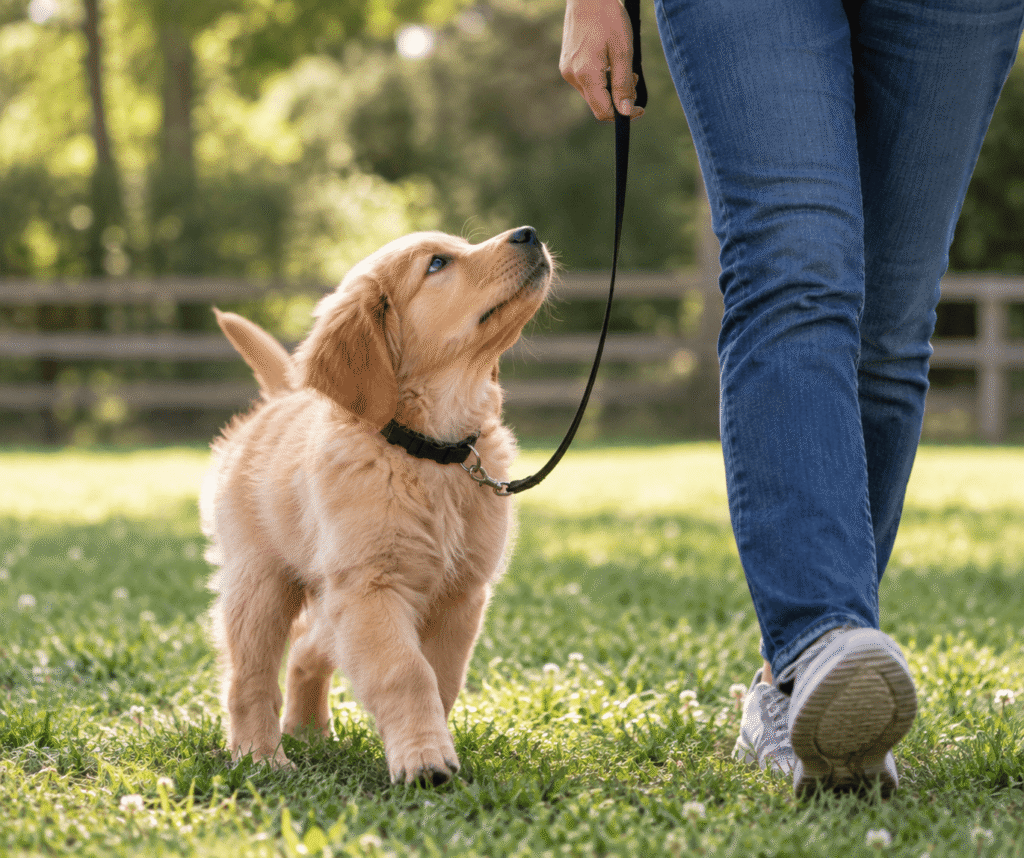
- Leash training and heel: Develop more structured leash manners in different environments
- Extended stay: Gradually add duration and appropriate distractions
- Leave it: Build impulse control around food, toys, and environmental distractions
Training sessions can gradually become longer as your puppy’s focus improves, but breaks are still important. Consistent cues and expectations make it easier for your puppy to understand what behavior is being requested. Short practice sessions incorporated into daily routines are often more useful than pushing through a long session after your puppy has lost focus.
Group classes and private lessons can both be useful at this stage, depending on availability, your puppy’s needs, and the provider’s requirements. Professional trainers can also help owners practice behaviors around gradually increasing distractions. Consistent training can reduce opportunities for behaviors such as jumping, pulling, and inappropriate chewing to become well-practiced habits.
Advanced Obedience and Off-Leash Training (6+ Months)
From around 6 months onward, many puppies enter adolescence with increased independence and greater interest in the environment. This phase can also bring temporary regression in previously learned behaviors.
This is when more advanced training may become realistic:
- Off-leash reliability in controlled, appropriate environments
- Longer stays and distance work
- More precise heel work around distractions
- Complex command sequences
- Proofing—practicing desired behaviors across different contexts, surfaces, people, and environments
Structured obedience programs can become useful during this stage as owners work toward reliable responses around greater distractions and, where appropriate, off-leash control. If your adolescent puppy develops significant fear, reactivity, aggression, or separation-related behavior, seek qualified professional guidance rather than assuming it is simply a phase.
Training should continue throughout adolescence and adulthood rather than ending after puppy classes. Continued practice helps strengthen behaviors across different environments and distractions as your puppy matures.
Understanding these training stages leads naturally to the question of which professional training format best fits your situation.
Professional Training Programs and Implementation
Choosing the right training approach depends on your puppy’s developmental stage, health, your schedule, and your long-term goals. Different formats are appropriate for different puppies and situations.
Training Method Comparison
Here’s how common puppy training options and current Atlanta programs compare:
| Training Type | Typical or Listed Starting Age | Format | Best For |
| At-Home Foundation Training | As soon as your puppy comes home, often around 8 weeks | Several brief practice sessions throughout the day | Name response, basic cues, crate routines, house training, and manners |
| Group Puppy Classes | Often available during early puppyhood when health requirements are met | Provider-specific | Controlled socialization, basic skills, and working around distractions |
| 1-Week Puppy Board & Train | 10–19 weeks under current Atlanta program requirements | 1 week of immersive puppy training | Crate routine, potty-training foundation, marker training, come, sit, leash introduction, and bite inhibition |
| Adult Obedience and Board & Train | Generally 5+ months under current Atlanta program requirements | Private lessons or immersive programs | More structured obedience, distraction work, and age-appropriate off-leash goals |
Very young puppies can begin with simple foundation work at home or with an age-appropriate professional puppy option. Group puppy classes can provide controlled exposure to other puppies and people when health requirements are met. Off Leash K9 Training Atlanta currently lists its 1-Week Puppy Board & Train for puppies 10 to 19 weeks old, while its adult obedience and standard Board & Train programs generally begin at 5 months. Review current eligibility requirements before enrolling your puppy.
The best approach for many Atlanta owners may involve starting with age-appropriate foundations and adding more structured professional training as the puppy matures.
Off Leash K9 Training Puppy Program Process
For owners considering professional training, here’s how to approach the process based on your puppy’s age and needs:
- Initial assessment: A free phone consultation can help the team learn about your puppy’s age, current behavior, and your training goals.
- Customized training plan: Based on age, training history, and owner goals, the recommended approach can range from basic puppy foundations to an age-appropriate Puppy Board & Train.
- Progressive skill building: Training progresses from simple skills toward greater duration, distractions, leash work, recall, and, when appropriate, off-leash reliability.
- Owner education and follow-through: Owner instruction helps families understand how to reinforce the skills covered by their selected training program at home.
Training methods should be appropriate for the puppy’s age, temperament, and selected program. Off Leash K9 Training Atlanta currently uses marker- and reward-based training in its younger-puppy programs and lists e-collar-based obedience options for dogs generally starting at 5 months. Regardless of the program, harsh punishment, intimidation, and forcing a frightened puppy through an overwhelming situation should be avoided.
Common Challenges and Solutions
Even with appropriate timing, Atlanta dog owners may encounter common training challenges. Here’s how to approach them.
Started Too Early — Puppy Can’t Focus
If your 8- to 10-week-old puppy struggles to concentrate, adjust your expectations rather than stopping training. Keep sessions very short, focus on simple skills, reward successful responses, and stop before your puppy becomes tired or frustrated. Several brief training opportunities throughout the day are often easier for a young puppy than one long session.
Missed Early Window — Puppy Is 8+ Months
If you’ve adopted an older puppy or simply didn’t begin training early, you can still make progress. The early socialization period may have passed, but puppies and adult dogs can continue learning obedience skills. You may also need to address behaviors that have become well practiced. Depending on your dog’s needs, consider a board and train program or work with professional dog trainers for structured guidance.
Inconsistent Home Training Results
A common reason home training stalls is inconsistency across household members. If one person rewards a behavior while another responds differently, or family members use different cues for the same behavior, learning can become less clear for the puppy. Professional guidance can help owners improve timing, communication, and consistency. Where appropriate, in-home lessons can also address challenges within the dog’s everyday environment.
Fear Period Setbacks
Puppy developmental stages can include periods of increased fear or sensitivity. An early fear period is commonly described around 8 to 11 weeks, and some puppies experience another period of increased sensitivity during adolescence. If your puppy suddenly becomes fearful during training, reduce the intensity, avoid forced exposure, and work at a distance where your puppy can remain comfortable. Build confidence gradually rather than pushing through fear.
Conclusion and Next Steps
The answer to when you should start training is straightforward: basic obedience foundations can begin as soon as your puppy comes home, often around 8 weeks old. More structured professional training should be matched to your puppy’s age, health, development, and the program’s requirements rather than a single universal starting age. The goal is to increase difficulty gradually as your puppy becomes ready for more challenging work.
Here’s what to do based on your puppy’s current age:
- 8–12 weeks old: Begin training with simple commands, potty training, crate training, and safe socialization. Keep sessions fun, brief, and age-appropriate.
- 3–4 months old: Continue foundation training and safe socialization. If you’re considering professional training, review the available puppy programs and their health requirements.
- Around 5+ months old: If appropriate for your puppy, consider a more structured obedience training program and begin adding greater duration and distractions.
- 6+ months old: Continue advancing obedience and carefully proofing skills around distractions. If you haven’t started training yet, it is still worthwhile to begin.
Regardless of where you are on this puppy training timeline, consistent training and realistic expectations can improve communication and help strengthen useful behaviors. Whether your puppy is 8 weeks old or 8 months old, training can continue progressing as your puppy develops. Atlanta owners can also explore socialization strategies, behavior support for reactive dogs, and advanced obedience as their puppy’s needs change.
Frequently Asked Questions
When should I start training my puppy?
Training can begin as soon as you bring your puppy home, often around 8 weeks old. Start with simple skills, routines, and short sessions, then gradually increase difficulty as your puppy develops.
How long should puppy training sessions last?
Young puppies generally benefit from short training sessions. A few minutes at a time may be enough initially, with several brief sessions spread throughout the day. Increase session length gradually as your puppy’s focus improves.
What are the most important commands to teach first?
Start with useful foundation skills such as name response, sit, come, leave it or drop it, and simple leash manners. These behaviors help build communication and can support everyday safety.
Can I start socializing my puppy before vaccinations are complete?
Yes. Socialization should begin early, but exposure should be controlled and appropriate for your puppy’s health status. Some puppy classes can begin as early as 7 to 8 weeks under appropriate vaccination protocols. Follow your veterinarian’s advice and avoid higher-risk dog areas until your puppy is adequately protected.
What if I missed the early training window?
You can still train an older puppy or adult dog. Early socialization is valuable, but obedience learning does not stop after puppyhood. Consistent training, appropriate management, and professional guidance when needed can help dogs continue developing new skills.
When should I consider professional training?
Professional guidance can be useful at any stage if you need help with training, socialization, or behavior. The appropriate program depends on your puppy’s age and needs. Off Leash K9 Training Atlanta offers puppy-focused options before 5 months, while its adult/e-collar obedience programs generally begin at 5 months.
Related Posts
Multi-Dog Household Training Tips: Complete Guide to Managing Multiple Dogs
What Is an E-Collar for Dogs: A Complete Guide to Electronic Training Collars
Signs of Stress in Dogs: Expert Guide to Recognizing and Managing Canine Anxiety
The Complete Puppy Socialization Checklist: Essential Experiences for Your Puppy
How to Stop Puppy Biting: Professional Training Guide for Atlanta Dog Owners
Dog Friendly Restaurants Atlanta: Complete Guide for Dining Out with Your Pup