
- You are here:
- Home »
- Blog »
- Dog Socialization »
- The Complete Puppy Socialization Checklist: Essential Experiences for Your Puppy
The Complete Puppy Socialization Checklist: Essential Experiences for Your Puppy
Introduction
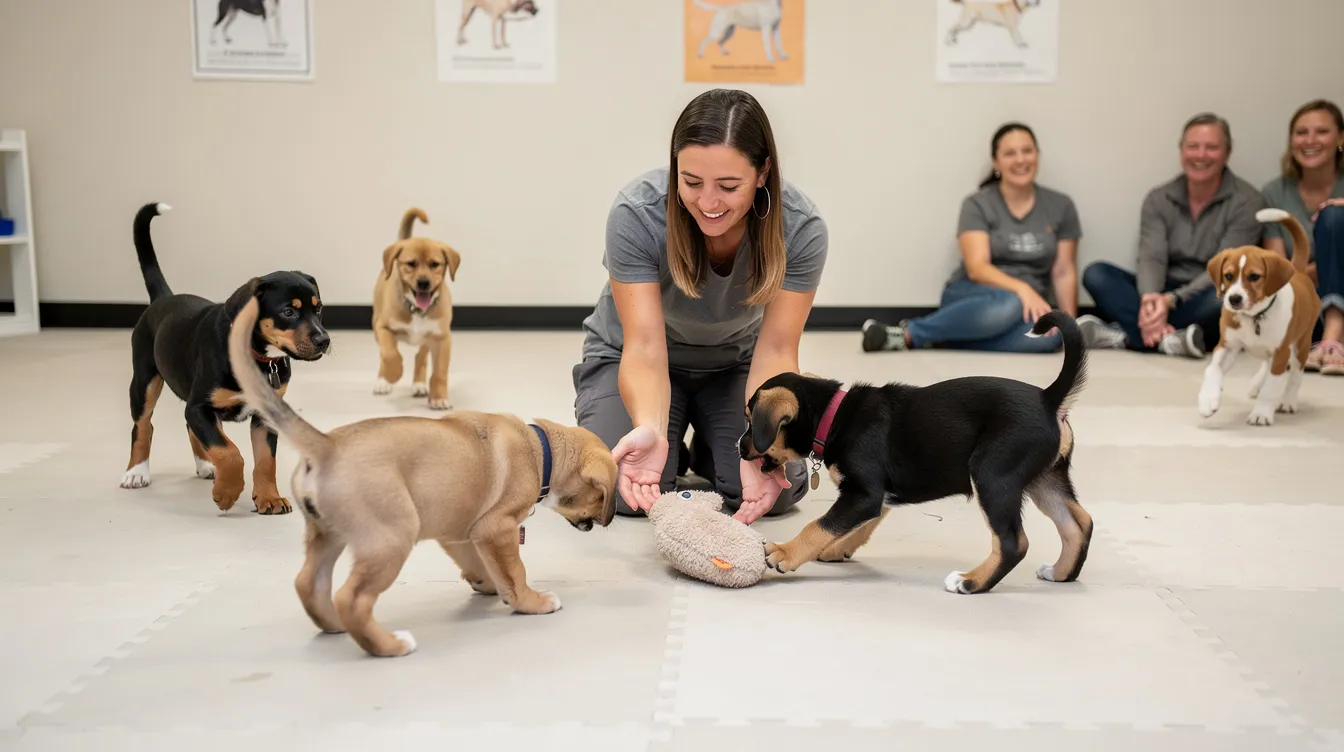
Puppy socialization during the first few months of life is one of the most important parts of shaping your dog’s future confidence, adaptability, and behavior. A puppy socialization checklist is a structured tracking tool that helps owners systematically introduce their pup to a wide range of people, animals, environments, sounds, surfaces, and handling experiences. Thoughtful early socialization can reduce the risk of fear and avoidance later in life while helping puppies learn how to respond calmly to everyday situations.
This guide covers comprehensive socialization from 8 to 16 weeks of age, including indoor and outdoor experiences, week-by-week guidance, and practical tracking methods. It is designed for new puppy owners in the Atlanta area seeking structured, practical socialization guidance, though the principles apply universally.
A puppy socialization checklist can include controlled exposure to new people, other animals, diverse environments, household and urban sounds, surfaces, and handling exercises during early puppy development. Some trainers and puppy resources use goals such as “100 things in 100 days” as a practical way to encourage variety, but there is no universal requirement that every puppy complete a specific number of exposures. The quality of each experience and the puppy’s emotional response matter more than simply reaching a number.
By following a thoughtful socialization plan, you can help:
- Build greater comfort around everyday people, places, sounds, and situations
- Reduce the risk of fear and avoidance behaviors
- Give your puppy useful experience handling new environments
- Support future training and everyday life skills
- Create positive opportunities for interaction between you and your puppy
Early socialization is an important foundation, but it does not guarantee a particular temperament or eliminate the possibility of future behavior problems.
Understanding Puppy Socialization
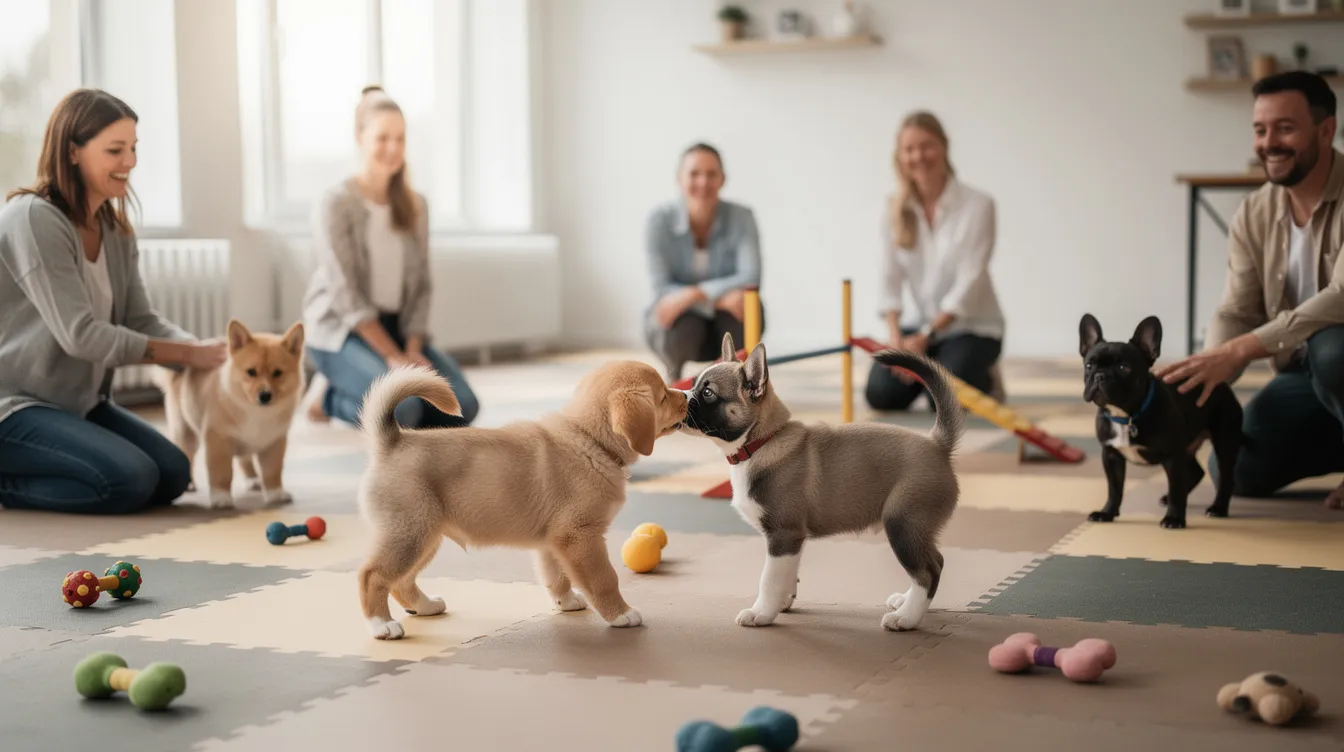
Socialization is a planned, managed process of exposing a puppy in a positive way to a broad range of life experiences during a critical developmental period. It is not simply letting your pup roam free or forcing interaction with strangers. Effective puppy socialization involves gentle exposure to new experiences paired with high-value treats, praise, and play, so the puppy learns that unfamiliar situations can be safe and manageable rather than threatening.
This foundation in animal behavior can support future success in obedience training and everyday behavior. Appropriate early socialization can help puppies become more comfortable with unfamiliar people, animals, environments, and situations, while incomplete or overwhelming socialization may increase the risk of fear, avoidance, and other behavioral concerns later in life.
The Critical Socialization Window
Puppies have an especially important socialization period early in life. The American Veterinary Society of Animal Behavior identifies the first three months as the primary and most important period for puppy socialization, while the Merck Veterinary Manual describes the socialization period as extending to approximately 12 weeks of age. Socialization should begin early and continue throughout the juvenile period and beyond rather than stopping at a specific age.
Classic developmental research has shown that early social experience plays an important role in how puppies respond to people, animals, and unfamiliar situations. Puppies that receive inadequate early exposure may be more likely to show avoidance or fear later in life. Dogs can continue learning after the primary socialization period, although adapting to unfamiliar experiences may become slower as they mature.
This early work helps support later achievements, whether that’s reliable recall, therapy dog training, or simply living peacefully in a multi-pet household. Socialization should also be tailored to a dog’s future environment, so an Atlanta puppy destined for city life should gradually encounter urban noises, crowds, pavement, traffic, and other everyday experiences.
Positive vs. Negative Associations
How a puppy experiences something matters more than whether it experiences it at all. Puppies can form strong emotional associations during the socialization period. Exposure paired with fear, pain, or overwhelm may create negative associations, while gentle, controlled exposure paired with treats, praise, or play can help build confidence.
The difference between helpful exposure and overwhelming a puppy often comes down to pacing. Short, positive experiences are generally more useful than long, stressful ones. For example, introducing your pup to a vacuum cleaner from a comfortable distance while offering food can help create a positive connection. Forcing a frightened puppy to remain close to a loud machine can have the opposite effect.
Positive reinforcement is especially useful during puppy socialization. New encounters should be introduced at a level your puppy can comfortably handle while rewarding calm, curious behavior.
Essential Components of Socialization
Every puppy socialization checklist should cover five core categories: people, animals, environments, sounds, and handling. Puppy socialization should include exposure to diverse people and animals, varied surfaces and settings, and a wide spectrum of everyday noises.
People Exposures
Your puppy should have opportunities to safely encounter different types of people during the socialization period. This may include:
- Children of various ages: babies observed from a safe distance, toddlers, and school-age kids
- Adults and elderly individuals
- People wearing hats, sunglasses, uniforms, and high-visibility clothing
- People using wheelchairs, canes, or walkers
- People of different appearances and body types
- Delivery workers, mail carriers, and visitors to your home
Dr. Ian Dunbar has popularized numerical socialization goals, including exposing puppies to many different people during early puppyhood. These numbers can be useful as motivational targets, but they should not replace attention to your puppy’s comfort. Each encounter should be positive and manageable, and your puppy should always have the option to observe from a comfortable distance rather than being forced to interact.
Animal Interactions
Introducing your puppy to other dogs and animals in a controlled way can be an important part of socialization. Focus on:
- Well-socialized, healthy dogs with appropriate vaccination status
- Calm adult dogs that demonstrate relaxed body language
- Cats and small animals, supervised and at the puppy’s pace
- Livestock or wildlife sights and sounds if relevant to your environment
For Atlanta owners preparing for multi-pet households, calm and controlled introductions can be an important part of early development. Poorly managed or inadequate social experiences may contribute to fear or other behavioral concerns later in life, so quality matters as much as variety.
Owners who want additional guidance can explore puppy training in Atlanta for help with early obedience foundations, house-training questions, mouthing, jumping, and other puppy-training concerns.
Environmental Exposures
Puppies should gradually experience different environments and surfaces throughout early development:
- Indoor surfaces: carpet, tile, hardwood, linoleum, rubber mats
- Outdoor surfaces: grass, gravel, sand, wet pavement, metal grates
- Stairs, elevators, and automatic doors
- Urban settings such as sidewalks and parking lots
- Appropriate outdoor dining areas
- Parks and suburban neighborhoods
- Pet-friendly stores where puppies are permitted
- Weather conditions such as light rain, wind, warm and cool temperatures, shade, and sun
For apartment dwellers in Atlanta, strollers, slings, or carriers can provide opportunities to safely expose a young puppy to sidewalks, storefronts, sounds, and activity while limiting contact with higher-risk ground surfaces. Let your pup experience different environments from a secure space before gradually progressing to appropriate on-leash exploration.
The Complete Puppy Socialization Checklist
A systematic approach can make puppy socialization easier to manage. Organizing experiences by category and tracking your puppy’s reactions can help you create a plan tailored to your puppy’s life.
Week-by-Week Socialization Schedule
The first few months are an especially important period for socialization. Puppy socialization classes may begin as early as 7 to 8 weeks under appropriate vaccination, health, and facility requirements, but owners should follow their veterinarian’s advice when deciding which environments are appropriate for their puppy.
- Weeks 8–10: Foundation Experiences
- Focus on household sounds at low intensity, such as the vacuum, blender, hair dryer, and TV
- Introduce family members, friends, and neighbors without forcing interaction
- Let your pup explore several safe surfaces, such as carpet, tile, grass, and gravel
- Begin short, positive car rides and crate or carrier familiarization
- Handle paws, ears, mouth, and tail gently during calm moments
- Use treats, praise, and play to reward relaxed, curious behavior
- Keep sessions short and adjust the amount of new exposure based on your puppy’s comfort
- Weeks 11–13: Expanding Horizons
- Visit appropriate pet-friendly environments and consider positive visits to veterinary or grooming facilities
- Introduce children of various ages under close supervision
- Expose your pup to healthy dogs in controlled settings based on veterinary guidance
- Play recordings of thunder, fireworks, or urban noise at very low volume and adjust based on your puppy’s response
- Practice leash walking on safe surfaces and in suitable environments
- Encounter people wearing hats, uniforms, or carrying umbrellas
- Introduce gentle nail handling, teeth brushing, and ear inspection
- Focus on the puppy’s body language rather than trying to reach a fixed number of exposures
- Weeks 14–16: Continued Socialization
- Gradually introduce busier environments where appropriate
- Provide exposure at a comfortable distance to skateboards, strollers, bikes, and joggers
- Continue positive car rides and visits to new environments
- Introduce a wider variety of appropriate dogs and other animals when safe
- Practice calm leash behavior around manageable distractions
- Introduce tunnels, stable platforms, or puppy-safe agility-style equipment
- Continue rewarding relaxed and curious behavior
- Remember that socialization should continue beyond 16 weeks rather than ending at the close of this early developmental period
Integration with vaccination schedule: Core puppy vaccinations commonly begin around 6 to 8 weeks of age and continue through a series of doses, with core combination vaccines generally continued through at least 16 weeks of age. Vaccination schedules should be determined with your veterinarian based on your puppy’s health, lifestyle, and local disease risk. Avoid high-risk environments such as dog parks and areas heavily used by dogs of unknown health or vaccination status, but continue safe, controlled socialization during the vaccination period with your veterinarian’s guidance.
The Merck Veterinary Manual cites research that found no difference in parvovirus infection rates between vaccinated puppies that attended socialization classes before 16 weeks and vaccinated puppies that did not.
Tracking Methods Comparison
Socialization trackers help owners record puppy exposure and reactions. Here is how several tracking methods compare:
| Criterion | Simple Checklist | Detailed Journal | Mobile App | Professional Evaluation |
| Ease of use | Very easy; mark and go | Moderate; requires writing | Easy; log on your phone | Requires scheduling |
| Detail level | Low; basic tracking | High; notes on reactions | Medium-high | Very high; individualized assessment |
| Stress tracking | Limited | Excellent; record body language | Good if reactions are logged | Excellent |
| Cost | Free if self-created | Free with a notebook | Varies | Varies |
| Best for | Quick daily reference | Owners who want depth | Tech-savvy owners | Getting professional guidance on concerns |
For Atlanta dog owners, combining a simple checklist for daily use with professional puppy guidance can help identify areas that need more attention. Off Leash K9 Training, Atlanta, offers a Puppy Training Consultation for puppies under five months. A mobile checklist or notes app can also help owners track reactions and remember which experiences need more practice.
Monitor your puppy’s reactions during each exposure and adjust your approach based on what you observe.
Common Socialization Challenges and Solutions
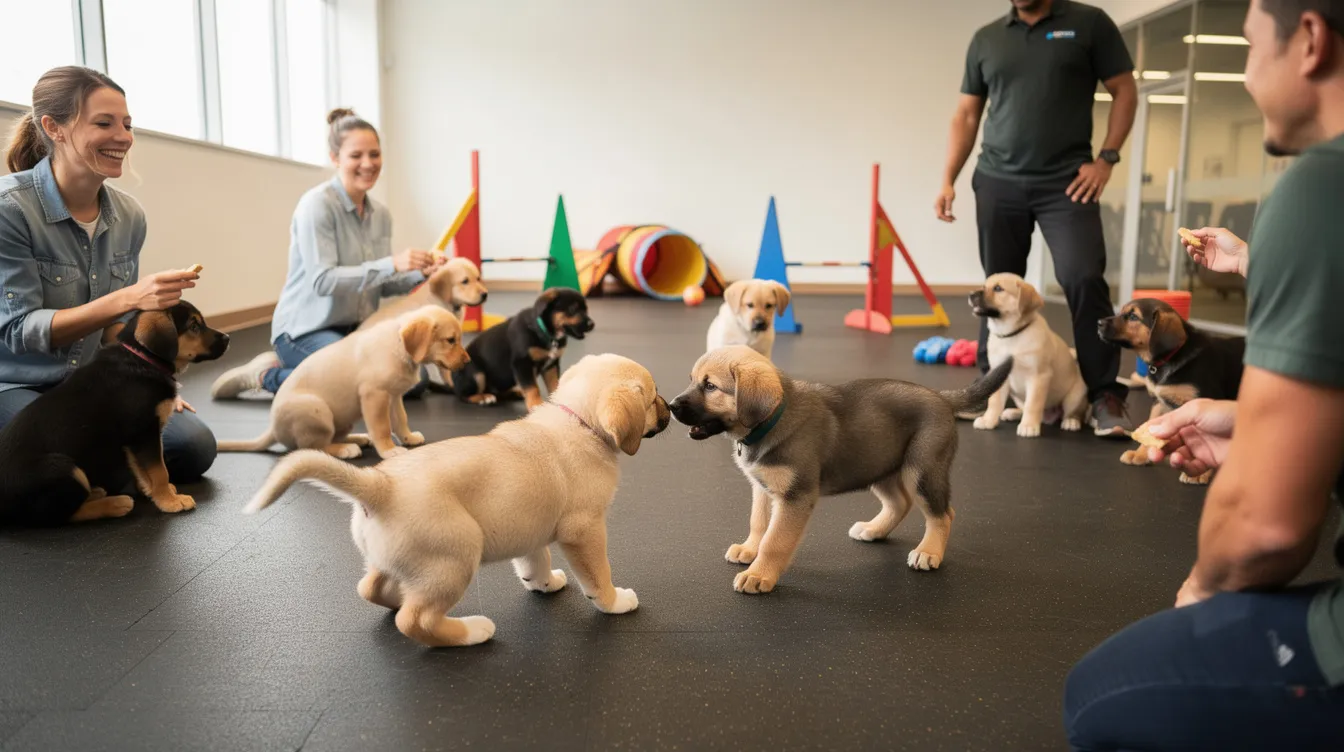
Even committed owners encounter obstacles during the socialization period. Here are several common challenges Atlanta puppy owners may face and how to manage them.
Fear or Overwhelm During Exposures
Possible signs of fear or stress in puppies include trembling, hiding, a tucked tail, ears held back, lip licking, freezing, or avoidance. These behaviors can indicate that an experience is too intense for your puppy at that moment.
When you notice them:
- Increase distance from the stimulus or reduce its intensity
- Offer a high-value treat if your puppy is comfortable enough to eat
- Let the puppy retreat to a comfortable space and never force interaction
- Use gradual exposure while respecting your pup’s pace
- If fear responses persist or become more severe, consult your veterinarian or an appropriate behavior professional
Reactive/aggressive dog training is available for dogs 5 months and older showing aggression or reactivity toward specific triggers. However, reactivity and aggression can have many contributing factors and should not automatically be attributed to incomplete puppy socialization.
Puppies should learn that new experiences can be safe and manageable. Pushing too fast can create the anxiety you are trying to prevent.
Limited Safe Exposure Opportunities
Not every owner has a big backyard or flexible schedule. Creative solutions include:
- Use a stroller or sling to carry your puppy through suitable public environments
- Invite friends and family to visit your home, bringing different clothing and accessories
- Set up a small indoor obstacle area using different surfaces and puppy-safe objects
- Play recordings of traffic, thunder, or children playing at low volume while monitoring your puppy’s reaction
- Use videos and sound recordings to supplement real-world exposure when appropriate
- If you need additional puppy training support, consider Atlanta’s 1 Week Puppy Board & Train, which focuses on crate routines, potty-training basics, come, sit, leash walking, marker training, and bite inhibition
Because participating puppies are young, the Atlanta program states that they are not taken outside the trainer’s neighborhood.
Atlanta offers many opportunities for outdoor socialization, but hot pavement and high summer temperatures require careful timing. Check surfaces before allowing your puppy to walk on them and choose cooler parts of the day when necessary.
Vaccination Concerns vs. Socialization Needs
Many owners worry about disease risk before their puppy’s vaccination series is complete. Veterinary behavior guidance supports carefully managed early socialization rather than completely isolating puppies throughout this developmental period.
Safe strategies include:
- Attend well-managed puppy classes that follow appropriate vaccination and sanitation requirements
- Socialize with known, healthy dogs in controlled private settings when your veterinarian considers it appropriate
- Carry or use a stroller for your puppy in public areas when ground contact presents unnecessary risk
- Avoid dog parks, heavily soiled pet areas, and contact with animals of unknown health status
- Work with your veterinarian to balance infectious-disease risk with behavioral development
Veterinary guidance has associated insufficient early exposure and social isolation with an increased risk of fearful and avoidant behavior later in life. This supports providing puppies with safe, appropriate social experiences rather than delaying all exposure until the vaccination series is complete.
Conclusion and Next Steps
Systematic puppy socialization can reduce the risk of future fear and behavior problems, help puppies become more comfortable with everyday experiences, and create a useful foundation for later training. The experiences you provide during early puppyhood are especially important, but continued positive exposure throughout adolescence and adulthood also matters.
Your immediate action steps:
- Start today: Introduce a small number of manageable experiences while using treats, praise, and play to reinforce calm, curious behavior.
- Use a socialization checklist: Organize experiences by people, animals, environments, sounds, surfaces, and handling, and track your puppy’s reactions.
- Get professional guidance when needed: A Puppy Training Consultation can help Atlanta owners address early training questions and puppy-specific challenges.
- Prioritize quality over quantity: Goals such as “100 things in 100 days” can help keep owners consistent, but a puppy’s comfort and emotional response matter more than reaching a specific number.
Socialization should continue throughout a dog’s life after the initial developmental window. Early positive experiences can support your puppy’s transition into formal dog obedience training and other real-world skills without guaranteeing a particular training outcome. The first three months are especially important, and continued positive exposure throughout the juvenile period helps puppies build on those early experiences.
Frequently Asked Questions
When should I start socializing my puppy?
Socialization begins early in puppy development and should continue when your puppy comes home. Well-managed puppy socialization classes may begin as early as 7 to 8 weeks when appropriate health and vaccination requirements are met. Continue providing positive new experiences throughout puppyhood and beyond.
How do I know if my puppy is overwhelmed during socialization?
Possible signs of overwhelm include trembling, hiding, lip licking, freezing, trying to leave, or other avoidance behaviors. If you notice these signs, increase the distance from the stimulus or lower its intensity and allow your puppy to retreat. Never force interaction.
Can I socialize my puppy before vaccinations are complete?
Yes, carefully managed socialization can begin before the vaccination series is complete. Well-run puppy classes and controlled interaction with appropriate dogs may be options, but puppies should avoid higher-risk environments such as dog parks and heavily contaminated areas. Follow your veterinarian’s recommendations based on your puppy’s vaccination status and local disease risk.
What if my puppy bites during socialization?
Puppy biting can occur because of teething, excitement, overstimulation, frustration, or discomfort. Redirect biting to an appropriate chew toy, keep interactions manageable, and seek professional guidance if biting becomes intense, persistent, or concerning.
How important is it to track my puppy’s socialization progress?
Tracking helps you see which experiences your puppy has encountered and, more importantly, how your puppy responded. A checklist or journal can support consistent exposure while helping you identify situations that need slower, more gradual practice.
Related Posts
When to Start Puppy Obedience Training: Complete Guide for Atlanta Dog Owners
How to Stop Puppy Biting: Professional Training Guide for Atlanta Dog Owners
Dog Friendly Restaurants Atlanta: Complete Guide for Dining Out with Your Pup
How to Teach Your Dog to Stay: Complete Guide for Lasting Results